


Savouring the bites of small-town lore peppered with self-realization in Josh Quirion’s second short-story collection, Homebound, evokes nights spent at the pub with pals and a pint or three. The stories are consumable in a handful of minutes, each one a snippet of someone’s day, someone’s crisis, their secrets, and dreams. The collection as a whole offers a faceted view of the Canadian microcosm specific to Quebec’s Eastern Townships, yet reflective of many small communities tucked in the pockets of this vast country.
Homebound Shoreline Press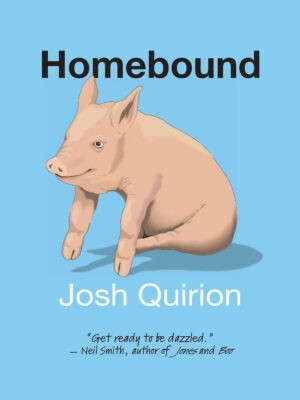
Josh Quirion
19.95
Paper
154 pp.
9781926953908
With a swing of the emotional pendulum, Quirion offers “Jugular,” depicting a touching but horrific day in a slaughterhouse, where an aspiring young chef sees his existential despair reflected in the black eyes of a lamb’s severed head. “Dollarama” is a sweet portrait of a loving family walking the ideological knife edge between conservatism and liberalism. Love and tradition keep them from falling. Near the end of the collection, “Akimbo” unwinds an adult son’s memories of his father’s quietly supportive tactics in the face of adolescent rebellion. “Antiestablishmentarianism, like living deliberately, was a helluva lot more work than I could have predicted.” Eventually, children become the caretakers of their parents, and perhaps break our hearts finally realizing what they gave us in childhood.
The story themes and the protagonists progress through the spectrum of maturity into adulthood. The collection opens with the misadventures of learning to be an independent adult in the world, progresses through entry-level jobs and apartments, and ends at the point where parents become equal to their adult children, as fragile and fallible as they are. Some narrators are more naïve than others. Though the stories are not connected in a single narrative arc, they often relate tangentially through characters and locations. Visiting recurring haunts, like the local pub, in different moments of time builds a kinetic backdrop and creates cohesion. Reappearing characters play the protagonist in some stories, then show up as side characters in others, fumbling along without the benefit of a first-person point of view. Quirion successfully portrays the roundness of his characters this way. We are all someone’s hero, and someone else’s villain.
Despite the brevity of the stories, each narrative is fully formed. A few of the pieces end with a perfectly tied bow and might have benefitted from a bit more restraint in the final few lines, but none leave the reader wondering what the author was intending. The writing is bright, efficient, and unfussy. Quirion’s love of sentences is apparent in the success of each paragraph. His rumination on the complexities of the human experience, connecting the specific to the universal, provides a rich experience in each small bite. Overall, well worth an afternoon of having “just one more” until the last page has turned. mRb
Gina Leola Woolsey is an author, editor, and educator living in Montréal.
0 Comments