


“You’re the most interesting person I’ve ever met,” Cannon, the titular character of Lee Lai’s new graphic novel, reassures her best friend Trish in a flashback scene partway through the book. “That’s never not going to be true.”
It’s 2005 and the two of them are hanging out in Cannon’s teenage bedroom, getting ready to move from the Eastern Townships to Montreal for CEGEP. Trish is curled on the bed, face covered in an unmistakable gesture of teenage angst, while Cannon sits on the floor – grounded, both in Lai’s drawing and in her role as staunch best friend. Through Lai’s astute writing, we soon discover that being interesting is not the only important trait of a best friend, especially once the concerns of late-twenties adulthood come barrelling in.
Cannon Drawn & Quarterly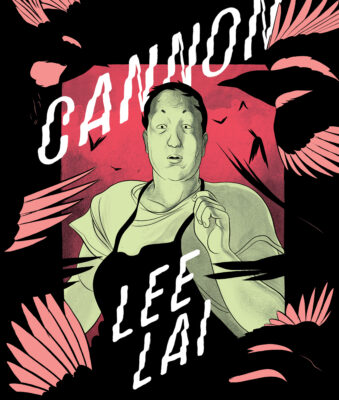
Lee Lai
$39.95
hardcover
300pp
9781770468023
Sitting at my kitchen table, drinking tea in the early fall sunlight, Lai tells me about her decision to centre Cannon on a long-term friendship, rather than a romantic relationship, which was the focus of her previous, award-winning graphic novel Stone Fruit. “My own experience of making friends in high school was defined around shared marginalization, particularly around queerness,” she says. “Those friendships felt so crucial to surviving high school.” However, she notes, high school friendships don’t always make it through early adulthood, even when they are anchored in shared experiences of otherness – in the case of Cannon and Trish, being queer Asians in a small white town.
Initially, she admits, she had set out to write the total dissolution of Cannon and Trish’s friendship, to explore a queer friendship breakup the way she had previously explored a queer romantic one. But then, as she was in the midst of writing, the COVID-19 pandemic hit. “My own friendships started getting tested,” she says, “and I felt that I just couldn’t write such a sad story anymore.” The resulting version of Cannon is a gentler one, invested in showing the paths we can take away from one another but also the ones we can take to reconnect, however imperfectly. Which doesn’t mean that Cannon doesn’t probe at painful truths – or explode with rage.
Cannon is a stoic character who is invested in her own calm, steady persona. Other people – notably Trish, Cannon’s restaurant coworkers, and Cannon’s own mother – depend on her reliability. Cannon listens to Trish’s endless griping about her recent breakup, her writing struggles, and whatever else is bothering her, without ever managing to get a word in. She remains calm and focused in the kitchen, which is increasingly stressful as the overbearing restaurant owner pushes his staff past their capacity. She regularly cares for her grumpy, aging Gung Gung, without any help. Char, Cannon’s new love interest, tells Cannon she is a good person for looking after her grandfather, especially while her mother, traumatized by his rageful parenting, won’t visit him. Cannon squirms in discomfort at this: “I just have to do it,” she says, “It’s not anything.”
For Lai, it was important to show that Cannon has learned her values from her Chinese family – that one takes care of one’s elders, no matter whether it is pleasant or not. “I witnessed that in my own family,” she tells me. “The care work might be quite punishing, but it isn’t a choice – it’s about values, which go deeper than anything.” However, Cannon’s tendency to deny herself any outlets for her own emotions begins to eat at her.
Lai finds many wordless, often humorous, ways to convey that Cannon is not feeling as stoic as she lets on. She uses washes of red in some of Cannon’s panels, as well as recurring visual themes of violence, taken from the classic horror movies that Cannon and Trish often watch together. The more Cannon refuses to talk about her stress, the more agitated she becomes on the inside. Lai depicts this with her signature subtlety: Cannon never says that she feels stressed out – instead, the food she prepares begins to take on a vibrating agitation; a scene from a horror movie interrupts a seemingly mundane conversation; the meditation app that she listens to during her anxiety-fuelled runs takes on an ominous tone. “In… and out – hhaaah. In… and out – aaaahh.” As we watch Cannon run, sweating and grimacing, through the neighbourhoods of Montreal, we wonder: Are these the sounds of calm, regulated breathing, or the panicked sounds of fear and overwhelm?
While Cannon is stuck in her cage of stoicism, Trish is stuck creatively. Here’s where Cannon gets a little (or a lot) meta: Trish is struggling to write a second book, but she has terrible writer’s block. Her inertia stems from the pressure she feels to write stories that are recognizably Asian to an imagined readership. “I’m not the kind of Asian that they want,” Trish tells her mentor, referring to a granting body that has provided her with funding. “They’re probably looking for, like, some intergenerational immigration-trauma shit.”
Here, Trish voices some of Lai’s own feelings about writing-while-Asian. “I wanted to play with the nihilistic feelings I have as an author towards #diversity,” Lai says. “There is this pressure to represent the ‘correct’ kind of Asian experience, for marketing purposes – to produce characters and stories that are more consumable to a non-Asian audience, that match their held assumptions about Asian-ness.” Unable to come up with anything that fits the brief, Trish makes the sneaky decision to steal storylines and characters from the lives of people around her. I ask Lai if she has ever been tempted to grab other people’s stories, in order to keep the creative juices flowing. “I think it’s better to ask yourself what you find fascinating about another person’s life, and to then build that into your own writing, rather than just lifting someone else’s details for your own storytelling,” she says. “What are the deeper elements that are drawing you in?”
Two deeper elements that Lai explores in Cannon are interpersonal conflict and anger. She manages to approach these topics with an unexpected mix of restraint and camp. On the one hand, as Cannon herself remarks to Trish at one point, the book isn’t interested in “some big Dr. Phil session” between characters, where everyone lays out their traumas and feelings, and everything gets neatly resolved. Instead, Lai lets conflicts and resentments brew; when confrontations do occur, they never lead to tidy outcomes. On the other hand, Lai wanted to have fun creating Cannon, which meant leaning into exaggeration. “There is something so ridiculous about anger,” she says. “Cannon is so stoic, but then she does hit a level of anger that becomes campy.” These scenes of over-the-top anger and hilarity allow Lai to showcase her drawing chops – her frames fill with bodies in motion, as people scream over each other in the restaurant kitchen, tangle together in bed, run until their shoes break, and engage in cathartic acts of vandalism.
In the end, Cannon is a testament to the importance of learning to balance external demands with internal needs – in the workplace, in romance, in family, and in friendship – especially in those precious, infuriating friendships that are just as strong as family bonds. As she moves into newer projects, Lai is making sure to leave space for levity and fun in her own process. In addition to a collection of graphic short stories (full disclosure: I am one of her collaborators on that book), she is working on “a little side project that is a lot sillier, with non-human characters, a more classic strip-style comic, like a sitcom.” She pauses and grins: “I miss writing jokes!”mRb


0 Comments