


What is life but a series of decisions and circumstances that have brought each of us to where we are now? The stories contained within Breathing Is How Some People Stay Alive examine the lives of folks who have made poor choices or who have met extremely unfortunate fates. This could be because a person’s world is small, or they’re a robot, or they can control time, or they simply don’t know how else to be.
Breathing is How Some People Stay Alive Guernica Editions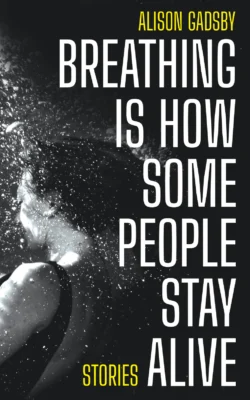
Alison Gadsby
$22.95
paperback
214pp
9781778490156
Take stories such as “The Deal with Roger” or “Jesus Is Drowning” (the former about a woman in a toxic relationship with a hateful android, the latter about a shut-in who is in denial about their own reality). They beg the question: Who is responsible for the insanity people tolerate in their own lives? Or maybe, more specifically, what we are willing to tolerate instead of being alone? What is required from a human to decide if they will spiral into loneliness or thrive in solitude?
Gadsby’s writing is clean, sharp, and direct. Her words are driven and uplifting despite the emotionally complex and difficult themes the reader is exposed to. It would be unfair to characterize the collection as negative. The stories remain hopeful and strangely optimistic, and underline the power of even a small change. Many are stories of survival, tales of escape, of finding freedom and resolution, or of folks simply taking a moment to allow themselves to come up for air.
The subtle thread of swimming is woven throughout each work. There’s water, there’s swimsuits, there’s swimming as a team sport, and there’s always a risk of drowning. Swimming feels so specifically referential to small-town life: a youth team activity that is social and keeps kids occupied and out of the house. Soccer moms will surely identify with this element, though it also could be taken as a nod to that forced-fun feeling of organized sport.
The swimming theme invokes both danger and freedom. On the strange-sci-fi tip, there are stories herein where android companions are lured into water to be put out of commission, and other stories where humans dive in and glide toward moments of solitude, reflection and peace.
Many of the protagonists are women who have been abandoned or left to take care of family members because nobody else would do it. It is a poignant observation about the role of women in modern society, and the invisible labour that is often expected of them. We meet characters like Clare in “Bruises Don’t Leave Scars,” who cares for her incapacitated father while also mitigating a fraught relationship with her burnout brother. These are stories about unconscious life-ruiners, and the emotional journeys of those who choose to carry on despite their worlds being void of empathy.
The last quarter of the collection takes a notably darker turn. Stories like “Irreplaceable” (a complicated father-daughter relationship that ends in drowning), “I Don’t Want to Fall But I Do” (a woman is disappointed when a crime against her does not happen) and “Payment for the Ride” (a depressed caregiver fantasizes about becoming a predator) all similarly explore broken relationships, disappointing male partners, or disappeared family members. Mostly, they explore the dark realities faced by shattered women who’ve been left to pick up the pieces of their own lives.
In the closing story, “The Going Rate for Grief,” a parent consoles a troubled tween by offering the advice: “We all have complicated relationships with our families.” This statement practically summarizes the collection and the messed-up lives of the characters therein.
These stories serve as a reminder that sometimes breathing is enough. Living one breath to the next is already a lot. It’s how some people stay alive.mRb



Natalia, I am so grateful for this review.