


We carry the baggage of our ancestors, in some form or another. But how much do we really know about what it contains? About which pieces were lost, discarded since they were packed – or about those that completed their journey to us? These are the musings of Susan Grundy’s latest novel, Black Creek, which follows 35-year-old Kate Stong Smythe, a Montreal-based architect, as she retraces seven generations of her family’s lineage in the wake of her mother’s death.
Black Creek Inanna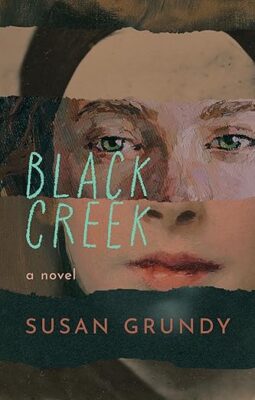
Susan Grundy
$24.95
Paper
228 pp
9781834210124
Reluctant as she may be, Kate is defenseless against the puppet master that is her grief after the loss of her mother. It prompts her to open the Stong genealogy book found among her mother’s belongings and slowly retrace her steps among the people and places it catalogues. Grundy structures the novel so that it oscillates between chapters of Kate’s present-day experiences and a chronological series from the first-person perspective of her female ancestors, aligning them with Kate’s real-time discoveries. It is an evocative format that firmly grounds her visits to the places her family settled once arriving in Canada, such as the real-world, historic Village at Black Creek. (It’s worth mentioning that this is inspired by Grundy’s own descent from the Stongs, whose actual log cabin and grain barn stand at the real Black Creek Village.)
In a clever move, Grundy positions a contemporary struggle with displacement as a sharp contrast to Kate’s ancestral search through the introduction of Joram, Kate’s taxi driver turned romantic interest. A Syrian refugee living with his mother and grandmother, Joram forces Kate – and the reader – to contextualize her “baggage” against a more immediate story of survival. It lends perspective, and helps Kate appreciate the challenges and perseverance of the women who came before her, seeing how shared qualities like stubbornness blossomed from necessity. She witnesses the effects of their circumstances and the things they sacrificed for future generations – privileges and simple opportunities to choose that she often takes for granted.
If the novel has a flaw, it lies in Kate herself. Grundy tends to overwrite her brilliance – Kate cannot pass a building without citing its complex architectural references in detail – and the plot often bends too conveniently in her favour. Whether it’s her architecture firm’s meteoric rise to success in a mere three months, or Joram’s immediate romantic interest in her, despite her genuine rudeness to him, the world of Black Creek occasionally feels too eager to please its protagonist. I also found some devices lack resolution; for example, in certain moments, Kate is transported into the historical spaces of her forebears (as if she’s time travelling). While this concept presents rich territory, it is used inconsistently, and these shifts are never fully explained, leaving the reader to wonder at their purpose beyond offering texture to the story.
Despite this, Black Creek excels as a study of Canadian intergenerational identity. It succeeds in exploring our complex history and in how we build upon foundations laid centuries before us – a reminder not to take that labour for granted. When she first begins probing the past, she brushes it off to herself: “Not her story, someone else’s; she was buffered by six generations.” By the end, Kate’s rigid blueprints have been rewritten. The journey allows her to finally contextualize the ghosts of the past, granting her the grace to forgive her ancestors’ limitations – and, ultimately, her own. mRb
0 Comments