

Are there any two words in the English language more beautiful than “cannibal rats”? Possibly, but Richard Greene gives them a run for their money. The titular rats are living on a ship off the coast of Ireland when they are discovered by a local newspaper, after which they “joined all that history of drowned fleets / without song or poem but a million tweets.” For a poem about rodents that eat each other, it has a real sense of grace, and humour so subtle you might blink and miss it.
Cannibal Rats Signal Editions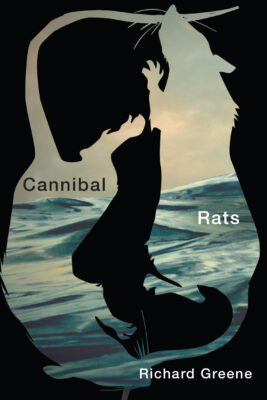
Richard Greene
$19.95
paperback
104pp
9781550656992
Revenant myself, I may not cavil
about how art and memory unravel,
followed my chances on the mainland,
got tenure, found the taxpayers’ open hand,
and am now a Jonah where I was born
confused by both the fog and the foghorn;
returning to my peculiar Nineveh,
I have no message: I’ve just been away.
These poems are not anxious about what they need to say, and because of that Greene is able to invest in the big picture, nurturing a single sentence over several lines. That also means the one-liners really pop: “I watch the weather losing heart.” Other rhymes wink: “eighty-nine / morphine,” “desperate / New York State.”
At another point, teaching his students, Greene observes, “They knew nothing then of Bogey or Ingrid, / of having Paris or ‘looking at you kid.’” If the sum total of Casablanca’s clichés actually made it a perfect movie, harkening it to a golden age of cinema, so too do Greene’s poetic conceits – couplets of eleven syllables, shipwrecks, journeys home – harken his work to a golden age of poetry. Only a few times does he reveal he is not so sure about ability to recall these things with one hundred per cent accuracy: “You were, I think, prisoner of memory,” “this vividness unexplained.”mRb

A lovely, accurate and deeply perceptive review.