


Fifteen influential female musicians who have been “unfairly neglected, underestimated, and even cancelled by the leading historians of jazz – most of them men” take centre stage in Stanley Péan’s Black Satin. The book mostly highlights Black musicians, with the exception of German pianist Jutta Hipp and the two musicians highlighted in the introduction, Fanny Mendelssohn and Maria Anna Mozart. The introduction details the backstory behind the title, as well as a brief history of these two talented women, and the legacies they were not permitted to pursue. This thoughtful opening encourages the reader to question who history claims to be the greatest, and who has been forced into the footnotes regardless of their talents and contributions.
Black Satin Véhicule Press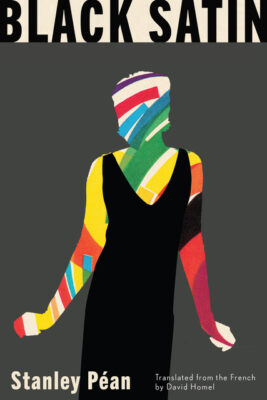
Stanley Péan
Translated by David Homel
$22.95
paperback
200pp
9781550657081
Péan honours the artists in chronological order, making note when their paths crossed or when they found inspiration in each other. He also details instances when these artists have received their deserved recognition, whether it be intravital or posthumous, and the significance that recognition can carry. For example, it is likely that many people’s first introduction to Ma Rainey was through the 2020 Netflix film Ma Rainey’s Black Bottom. Péan discusses the importance of the film adaptation and outlines the connections between the film and the true historical account of her life in his essay “The Blues: The Hurt and the Balm.”
Black Satin acknowledges each of these women not just as talented musicians, but also as the powerful leaders that they were. Despite encountering racism and sexism in various forms, all fifteen paved the way for future generations. Each essay provides the reader with a detailed understanding of the musician without being dense or monotonous. The author’s love of music and appreciation for each musician is evident without being overzealous. The focal point remains steadfast on the musicians, with the author only sharing his personal stories and experiences in a few brief instances. Through each essay, Péan makes it abundantly clear that each of these musicians is just as deserving of acclaim as their male peers who are more often remembered.
The book’s final essay focuses on Harriet Tubman and “her role as a muse.” I was skeptical about this essay as the closing piece, but found it to be an intentional and poignant ending, well suited for the book. This essay exemplifies how racism and misogyny have not ended, but simply evolved. It opens by detailing the 2017 U.S. administration’s decision that Harriet Tubman would not be replacing Andrew Jackson on the twenty-dollar bill, as previously announced in 2016, due to “a lot more important issues to focus on.” Despite this, the book’s final remarks are not discouraging, but an inspiring account of the music and film that Harriet Tubman’s story has inspired. Péan uses this final essay to remind the reader of the power of music in storytelling and preserving history.
I grew up as one of few Black girls in a small city. I started violin as a small child, and would soon begin driving an hour into the city with my mother for orchestra practice on the weekend. All of this to say, I know the brief escape from limitations music can provide. Music has given me a home I’ve shared with both loved ones and strangers, including these remarkable women. The histories told in Black Satin serve as a powerful reminder – to all, but especially to those who have and continue to be marginalized: your dreams are worth pursuing, your talents are worthy of recognition, and your legacy is deserving of remembrance.mRb
0 Comments