


H. Nigel Thomas’ And Then Again Begin is a realist psychological novel set in Saint Vincent and the Grenadines about conflicting currents of history and intimacy. The main characters are Millington and Paul, a Black, gay married couple from the West Indies, Millington’s aunt Pearl, and Millington’s mother, Mem. Millington and Paul return to tell Mem that they’re gay and married. Homophobia is a very serious problem in St. Vincent and the Grenadines. Same-sex sexual acts remain illegal on the islands under English colonial laws, carrying penalties of five to ten years of imprisonment, and while these laws are officially unenforced, violent homophobic attacks on gay men are a constant threat.
And Then Again Begin Guernica Editions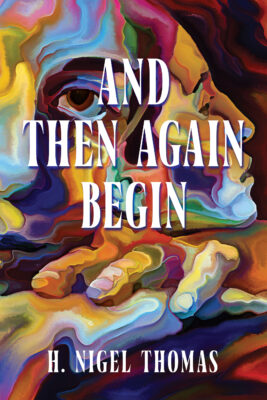
H. Nigel Thomas
$24.95
paperback
200pp
9781778490200
In the long moments of conversation and deliberation, these characters decide who they will be. Will Millington and Paul manage to resolve the problems in their marriage, which have their roots in sexual repression? Can their community, and Mem, accept them? Thomas’ characters are refreshingly discerning about the currents of ideology and history they swim in. Also refreshingly, they’re angry with the injustice of the limitations placed on them. There must be space for this kind of anger.
And Then Again Begin is a natural companion to Frantz Fanon’s Black Skin, White Masks, a foundational text in post-colonial theory. Fanon’s book, like Thomas’, describes what it’s like for a Black man educated abroad to return to the Caribbean island of his birth. Fanon writes, “In the French Antilles the bourgeoisie does not use Creole, except when speaking to servants. At school the young Martinican is taught to treat the dialect with contempt. Avoid Creolisms.” The code-switching of racialized dual consciousness is notoriously difficult, tinged with racially enforced shame. One learns to purge one’s natural sounds, vocabulary, and grammar. What Thomas does not dwell on, though he would have every right to, is that this is painful, a kind of self-mutilation, not unlike the inner conflict produced by being closeted, lying about who one is, about love and intimacy, putting on a daily, odious performance under the threat of violence.
Any writer attempting to transcribe verbal dialect has to contend with the struggle between tonal realism and stereotype. The naturalism Thomas achieves in narrated Creole is very moving. It has the effect of dismantling the perception that there is something wrong with speech that reflects history – actually, it’s beautiful language.
Mem’s character is heartbreaking, specific and given detailed physicality, but also a familiar archetype: the religious, elderly mother whose life is defined by long hours of physical labour, and who in terms of her intellectual life and social mobility never stood a chance. Thomas lights the difficulty of this material with the same grace his characters give one another, which comes from the sincere hope for a better world. In this novel, pastors sometimes stand open to heterodox truth, and take risks to help families heal. Neighbours tend to one another in sickness and sit together through crisis. Thomas’ realism is uncynical – the intimacy between his characters is very often one of restoration, studied fairness. These individuals, like their societies, hang in the balance. We watch, as we watch ourselves, to see what will prevail.mRb



0 Comments