

In Empties, Neil Surkan writes from within systems of exhaustion: ecological, emotional, linguistic. The collection, the latest from Nanaimo’s poet laureate, is preoccupied with water in all its forms and absences – in tears, rivers, rainstorms, droughts, emptied lakes, and plastic bottles gathering along the shore. Water is material and metaphorical, a medium through which the collection grapples with climate grief, queer love, parenthood, endurance, and the unstable capacities of language itself. Nothing remains fully separate; all things leak into one another, even in decay.
Empties McGill-Queen's University Press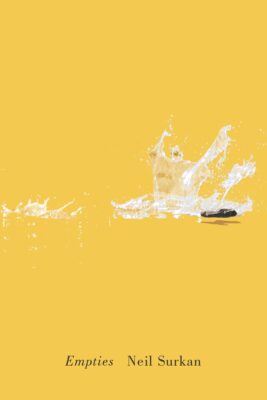
Neil Surkan
$19.95
paperback
104pp
9780228027317
The dead can’t punish you:
like a broken cup in a shaking hand,
accept the damage. Our lot is damage.
His poetic substitutions enact a world framed by instability, contingency, breakdown, and depletion, and inhabit what Surkan calls “trapdoor-gaps,” spaces where language falters and systems fail to comprehend or address a situation of ecological crisis.
One of the collection’s most memorable poems recounts reading The Giving Tree to his son. Rejecting the book’s moral logic of endless self-sacrifice, the child declares: “there’s too much taking / to forgive,” before arriving at the wonderfully strange threat: “you will kill the boy / for what he’s done.” Yet the poem ultimately pivots toward tenderness, ending with the speaker wondering, while “smoothing / down your prickling hair,” “whom will the marred tree love?” The poem captures much of what makes Empties compelling: its ability to move rapidly between humour, grief, ecological critique, and genuine intimacy. Surkan’s poems are varied, precise, and overlapping, formally agile while remaining emotionally grounded, even as the ground beneath his feet shifts and trembles.mRb

0 Comments