


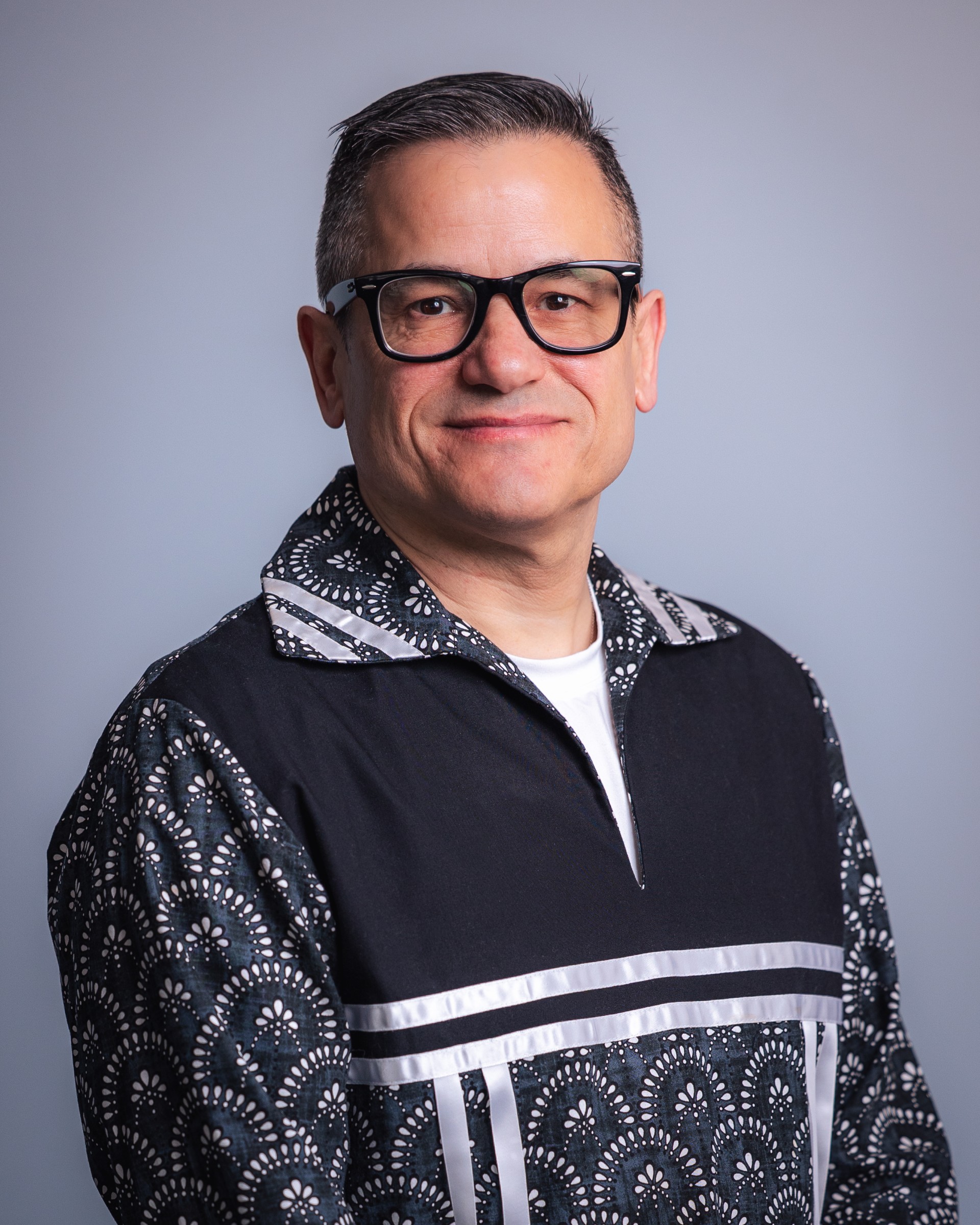
“Before embarking on any important piece of work, whether it is during a meeting or the creation of a document, many people believe that it is worthwhile to say a few words before all other words that come after.” I’m quoting from the recently published Everyday Reconciliation, in which Kahnawa’kehró:non author Derek Aronhie:nens Montour asks us, in a passage containing his version of a traditional Ohén:ton Karihwatéhkwen, to imagine ourselves in connection with what’s around us before embarking on anything important. It’s perhaps the most beautiful part of the book, co-authored with Elin Sandberg Miller, which itself embarks on something important: asking what role ordinary people can play in rebuilding trust between Indigenous and non-Indigenous people in Canada.
Everyday Reconciliation HarperCollins Publishers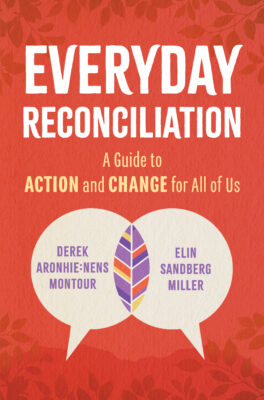
A Guide to Action and Change for All of Us
Derek Aronhie:nens Montour and Elin Sandberg Miller
$34.99
hardcover
304pp
9781443475648
A collection of thirteen essays, Everyday Reconciliation is the kind of book that is written to be understood, in plain-clothed English with direct references, and beginning with a co-written introduction. But Montour’s first chapter starts dramatically, during his time in the Canadian military at the height of the 1990 Oka Crisis, when he remembers a fellow trooper saying: “I hope we go in and kill all them savages!”
Speaking from across the table, Montour recalls that year – at which time he served alongside Miller’s future husband, federal Canadian Identity and Culture minister and former Indigenous Services Canada minister Marc Miller, who first introduced the co-authors. “I didn’t share the comment at the time with anyone. It was only later on in reflection that I realized, am I in the right place right now to be here? Fellow soldiers are saying this about my people,” he remembers. “It struck me very hard. So I shaped that first chapter around that experience, and just started writing.”
In moments like these, Everyday Reconciliation feels memoir-like; but it is also, by its own description, a “guide.” As Montour tells me, “It’s really more like a Coles Notes kind of thing for non-Indigenous people to kind of take active part in.”
Still, in many ways, it is a book about trauma: both Montour’s and his community’s. He writes about being sexually assaulted in Montreal, and tells me it’s something that, after much deliberation, he decided to tell his son – who was not yet a teenager – before publication. He tells me about a powwow he attended this summer, where he saw his cousin and learned she was “in a void” with the book, because it surfaced her own memories of the Oka Crisis: “She’s only at chapter two, because she has to keep putting it down; because it affects her. She was part of that, part of 1990. She was with her sister on the Mercier Bridge when it was stoned with all of the cars.”
Both the breadth and depth inherent to the topic of reconciliation mean that this book in its entirety might be difficult to digest in one sitting. Be prepared to approach with intention: you will have to put in effort to meet Everyday Reconciliation where it’s at, though the labour will be a fraction of what was put into it. In that vein, do not expect it to woo you at every moment with metaphor or narrative colour; it is unapologetically clear in its purpose, at times similar to a first-person, conversational instruction manual, with multi-clause explanations of historical artefacts that are not necessarily dense, but not entirely light reading either.
Montour, for whom the writing process was certainly not a light one, and who initially took a few weeks deciding if he wanted to share his story at all, hopes being vocal will help others do the same. Trauma is the elephant in the room, he says, whether it’s addressed or not: “We’re feeling different parts of it – some feel a trunk and some feel a leg – it’s slightly different for everybody, but it’s still the same thing.”
In contrast, Miller seems to come from a different position, and perhaps it’s only natural to question that; even she herself “found it difficult to know if she was even being honest with herself about her motivations” as she learned more about white saviourism, reads a co-written section of Everyday Reconciliation. I admit to her that I had the same question, and ask if she’s encountered any skepticism. She says most of the suspicion has come from non-Indigenous folks, and tells me most of what she’s heard from Indigenous people is that “non-Indigenous people need to take this on; we can’t do it for you.”
Montour says he also had questions: “I didn’t want to be a token Indian, you know?” But the book seems to have really been formed out of conversations and the trust built from them. “Like we’ve been trying to say in the book, you start having a relationship by talking to somebody… and then that builds a connection.”
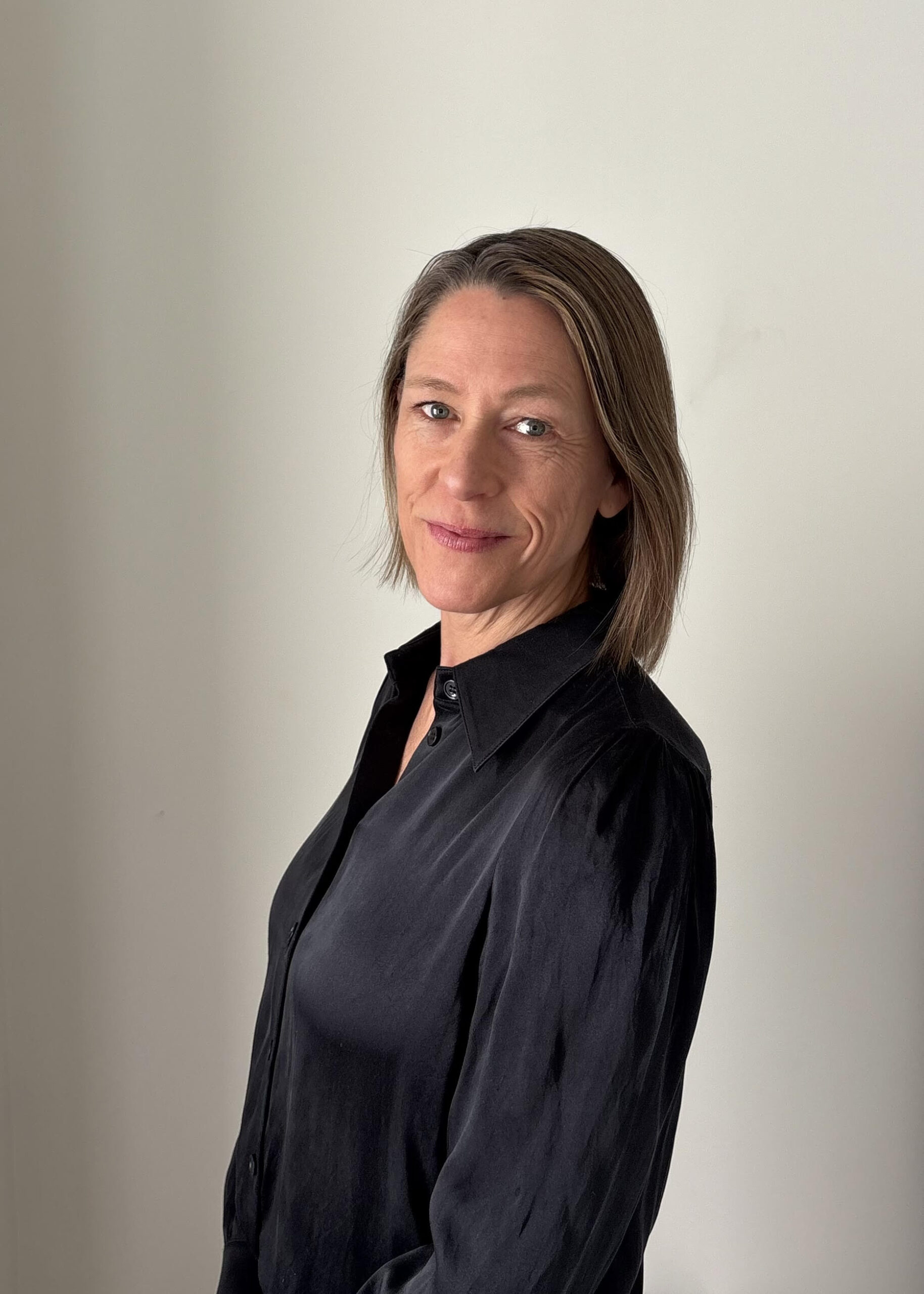
Miller tells me she’s written fiction before; Montour says he doesn’t consider himself a writer. These are two people who are, in many ways, from opposite ends of the life experience spectrum; but at the same time, I wouldn’t say there are real distinctions between their writerly voices, and, sitting across from me in Old Montreal, the connection they speak of is obvious. They put the book together writing late on evenings and weekends, and much of the work was passed between each other and their editor before finalization. “I would write furiously, I guess, just to get whatever’s in here on the paper, on the computer screen,” he says. “We kind of envisioned a much smaller book than what it turned out to be.”
For a self-described “guide,” the book is less prescriptive than some might assume; the authors are quick to talk about the process behind arriving at their answers, often reached after deliberation with others or each other. As someone who immigrated to Canada as an adult and knew little about Indigenous history despite diplomacy training, Miller’s journey with reconciliation first started with conversations with Indigenous people. Even Montour says conversations with Miller led him to reflect further or differently: “We had some good conversations about land. I started reflecting on, what are the expectations of the Land Back movement? And how far do we go? And what does that look like? And what’s realistic or not? It’s simple to say, Land Back, give it all back. But it’s a lot more complicated.”
Still, Everyday Reconciliation, straightforward and essayistic, will not let you forget its purpose as “A Guide to Action and Change for All of Us.” And perhaps that is exactly what we need; or perhaps it is just where we need to start. “Knowledge is power” is the adage that comes to mind – or maybe knowledge is just a means of messing up less often – as Miller writes, “Most mistakes have come down to my knowledge gap.”
Whether this book is powerful or simply informative, the fact is that reconciliation – sometimes better described as “conciliation,” writes Montour – is a duty for any non-Indigenous Canadian. Even the globally minded among us, who prefer to chip in on the burgeoning conversation of Canada’s European and international presence, would do well to acquaint ourselves with our domestic history first. The pressure to reconcile properly may also feel immense – such that the pressure of evaluating this topic led your reviewer to immense procrastination – but it’s also important to remember there is no shame in trying. “There’s a lot of ignorance, and that’s okay. It’s not to be ashamed of because that’s by design,” Montour says. “The school systems were designed not to educate about a different perspective. But in today’s world, there’s no excuse,”
In some ways it is impossible to even review something so objectively important and candid. In some ways this is not really a review; rather just a few words ahead of all the words, advice, reflections, and history lessons to come after, should Everyday Reconciliation be something you choose to embark on.mRb


0 Comments