


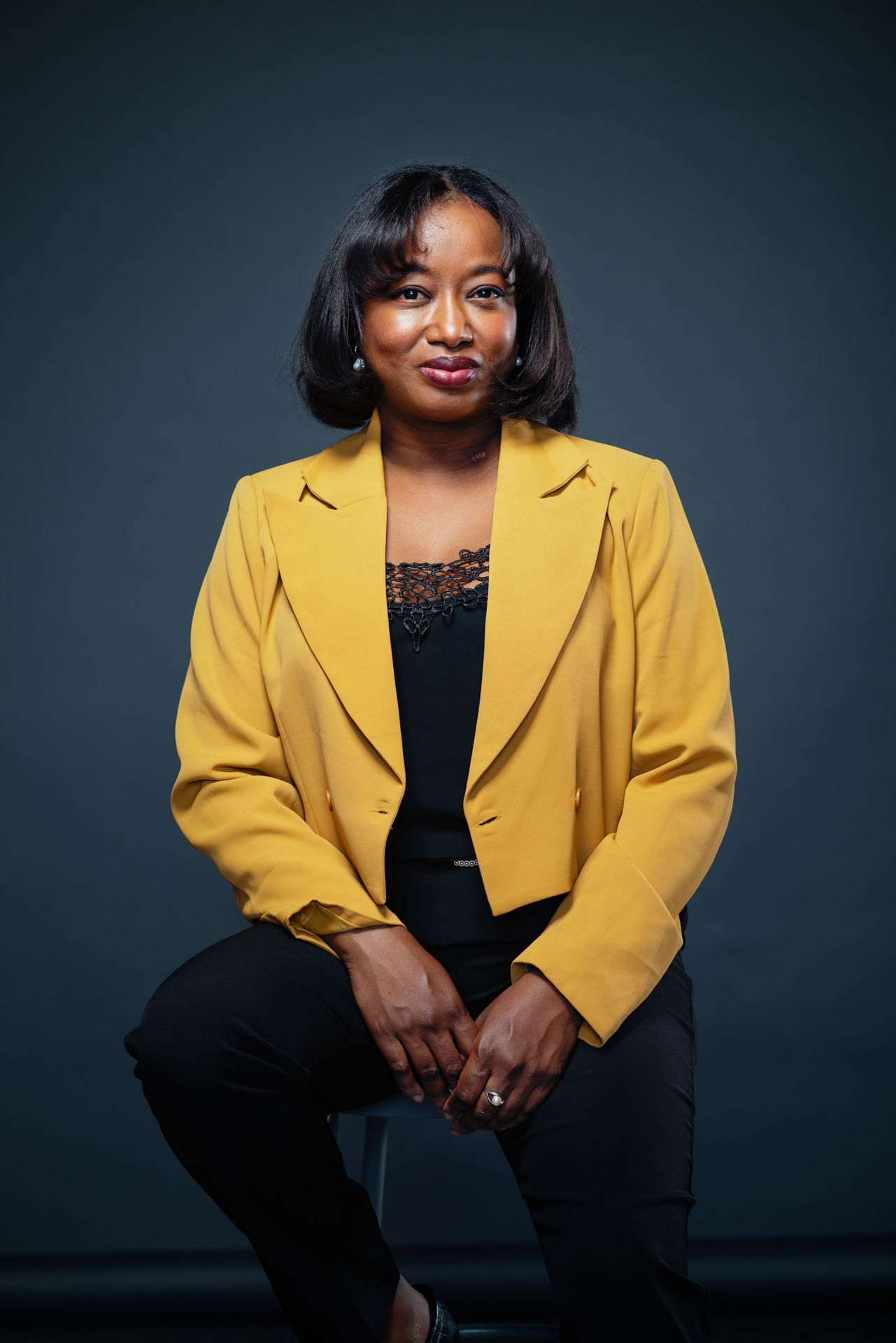
Chanel Sutherland’s debut book of short stories, Layaway Child, gets its name from a term she learned when she first arrived in Montreal as a child with her sister to reunite with her mother who had, like many, decided to seek new horizons in North America. The inspiration came from when she and her mom would go to Zellers. “I was maybe twelve-thirteen and she was putting [clothes] on layaway, where you pay a little bit [at a time], and then eventually when you pay it up, you get it,” she recalls. “I was standing at cash with her and I was thinking, ‘Oh my god, that’s what happened to me.’ … She put me aside with my grandparents and she paid and paid and paid until she was able to finally afford to [get me] over.”
Layaway Child House of Anansi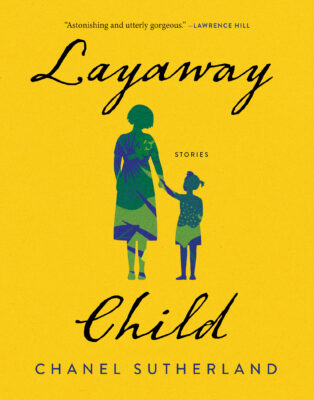
Chanel Sutherland
$24.99
paperback
296pp
9781487013639
The stories of Layaway Child came to Sutherland gradually amid her adulthood, when her relationship with her mother blossomed anew: “I’m in my forties now, so my mom has kind of transitioned from just being my mom to now being my friend… [She] is a big part of my writing process because there are so many things I didn’t know about. I was ten when I came here, so there’s a lot of stuff that adults in the Caribbean tend to keep away from children. So finally, I’m learning about those and seeing them with a new eye, with the adult’s eye instead of the child’s eye.”
Some of these stories, before even making the collection, had already gained recognition by winning the CBC Short Story Prize in 2021 and 2022, as well as the Commonwealth Short Story Prize in 2025. Editing all the stories together was an entirely different process for Sutherland once they were acquired by Anansi: “We needed to figure out how to make them more connected, and that’s when a really cool part of the process started for me, to create and find ways to edit the characters. [There are] three different arcs within the book itself. I really enjoyed doing it.”
Each of these arcs is dedicated to female characters who intertwine throughout the stories, especially young Black girls growing up in a process of migration. For Sutherland, it was important to put these girls, who are too often overlooked, at the forefront of her book. Her spark of inspiration came from reading Maya Angelou’s I Know Why the Caged Bird Sings in her childhood. One character in Layaway Child discovers the poetry collection in the library. Seeing herself represented in Angelou’s book opened Sutherland’s eyes to the importance of naming these experiences and the difficulties that come with them: “Being a Black dark-skinned girl, I was expected to grow up way sooner than I should have been asked to. I think there’s this expectation [in the Caribbean] that’s put on Black girls to grow up and take care of their younger siblings… I wanted to put visibility on that and to show the emotional damage that can do to their childhoods that are being erased in real time – their girlhoods.”
Layaway Child thus could be qualified as a collection of coming-of-age stories, but far from the traditional sense. Girls and women of all ages experience deep personal shifts in response to living in a foreign land that refuses to recognize them despite the labour they provide as maids, nannies, students, or teachers: “[It’s] a book about becoming, because the characters in it, they’re constantly becoming something.” Sutherland also speaks about the importance of “folks having dreams and having to defer those dreams, having to transition and become something else in order to survive… It’s a reality for many Caribbean folks that don’t get to live their dreams, because they have to put them aside in order to find a way to make a living for themselves and their children.”
And by writing these castaway dreams into the stories of her collection, Sutherland effectively challenges this cycle of mere survival and manages to make a lifelong dream come true for herself and her mother: “My mom’s dream is what I’m doing now. If you were to see my mom, the way she is reacting to all of this, you would think she wrote the damn book. This is the dream coming true for her… She gets to see that her sacrifices – and she would never call them sacrifices – but her sacrifices were not taken for granted and amounted to something important.”
Above all, Sutherland’s stories are an offering to the members of her community who supported her throughout her life and are represented in the book: “As an immigrant, the world is so small, especially as a child. I think my mom made it even smaller for us by ensuring that we had community, that we understood and recognized it.” And for the author, this recognition would be useless without including the elders who share their knowledge via oral tradition – deeply rooted in the Caribbean – to keep the collective culture afloat despite the distance of their homelands. “I have this fondness of speaking to older people because they have so much knowledge to pass on,” she says, adding that she wants to pay homage to those women that came before: “It’s a way of saying ‘I do see you.’ I appreciate all that came before and that allowed me to be where I am.”
It is in this spirit of remembering that Sutherland chooses to close out her collection with the award-winning short story “Descend,” which takes place in the entirely different era of chattel slavery, and creates a profound and meticulous rupture for the reader: “When I write, I try to remember how we got here, from enslaved Africans who were ripped from their homes. And I try to make sure that some spirit of that experience exists in any of my writing… especially at a time when some folks in power are trying to erase our history, and it’s so important that we don’t allow it.” To write this story, she explains, “I decided I was going to channel the ancestors. I sat there and it was so immediate. I felt like they were there with me.” By tying the destiny of the characters to a larger trajectory rich in history and possibilities not yet known, this short story makes the collection truly triumphant.mRb

0 Comments