


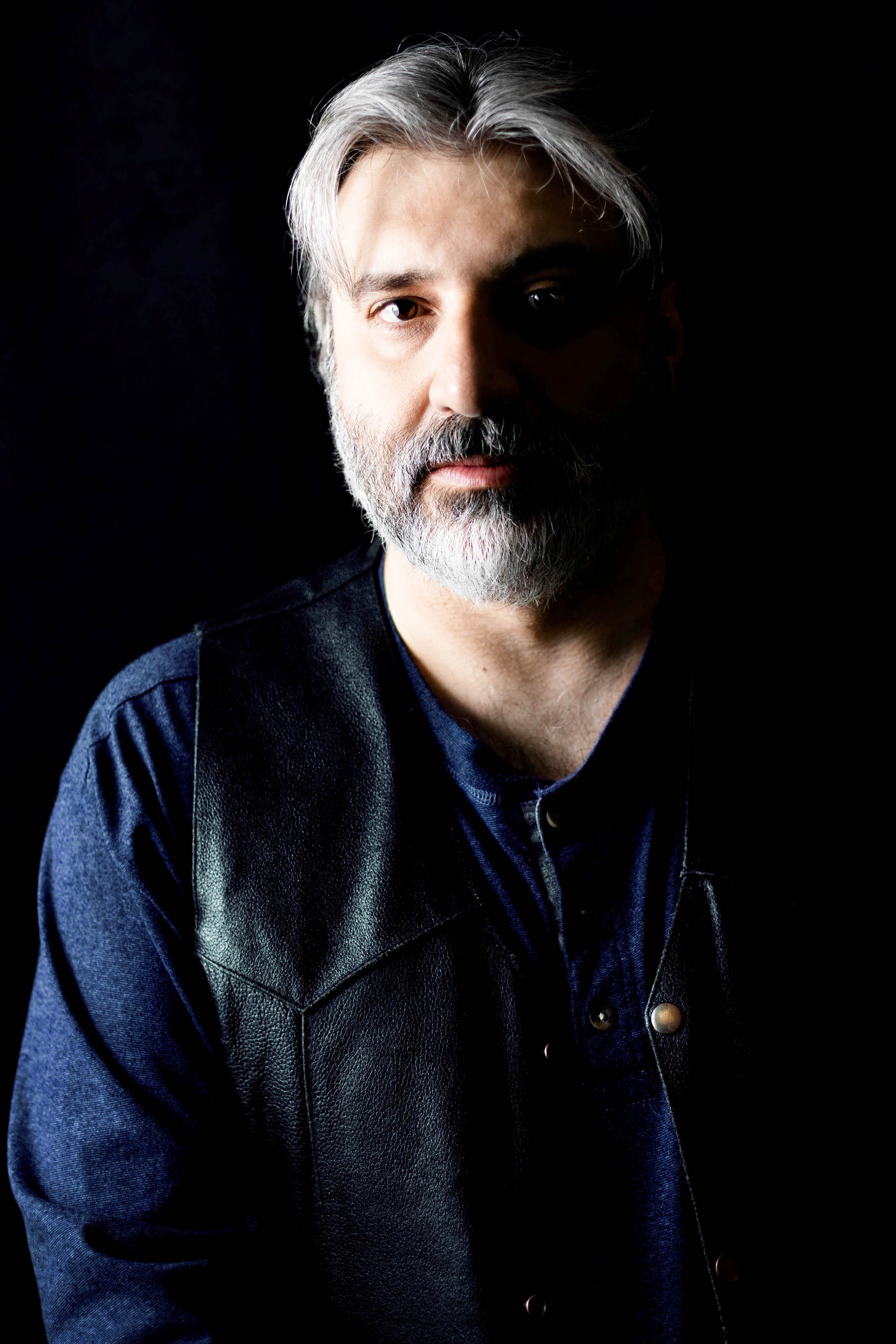
“The unexamined life is not worth living,” said Socrates, an apt motto for Andreas Kessaris, who has a new collection of personal essays, The Grand Tour of Park Ex. Kessaris grew up as the son of Greek immigrants in Park Ex, the neighbourhood at the end of Parc Avenue between the Metropolitan Expressway on the north, Boulevard de l’Acadie on the west, and railroad tracks on the south and east. Reading this sequel to his debut memoir, The Butcher of Park Ex, the reader feels as if they are sharing a beer with the author, listening to him recount his history, as they both lean on the edge of a bar on Rue Saint-Roch.
The Grand Tour of Park Ex Guernica Editions
& Assorted Half-Told Yarns
Andreas Kessaris
$25.00
paperback
154pp
9781771839730
“You had a pretty tough time of it growing up,” I say to Kessaris when we meet up on Zoom. “Yet, you managed to survive and ultimately thrive. To what do you attribute your resilience?”
“Writing is therapy,” he tells me with a laugh. “When you open yourself up, you find [that] many people relate to your experiences. I hear a lot of ‘That happened to me too.’ When you really connect with readers, you feel better.”
Known to writers, readers, and literati as the face of Librairie Paragraphe Bookstore, where Kessaris has worked as the events coordinator for over seventeen years, I ask him when he decided to write his own books. “Oh, I always wanted to be a writer,” he says. “I started out with a blog. Once I began this book, it just poured out.”
Kessaris is deft with visceral detail, drawing parallels between experiences. In “Participant,” his mom decides to learn French so she can chat with her great nephew who is starting French school. She tries to get her son to do her Level 1 homework for her. When he refuses, she slams her workbook against a wall, calling him axristos, Greek for “good for nothing.” Nonetheless, she gets a certificate which she frames and hangs on a wall.
Meanwhile, Kessaris learns how to game the system in gym class during the Canada Fitness Award trials. Unathletic, he’s humiliated when he receives a “participant” sticker. What is he supposed to do with this mark of shame, he wonders: stick it on his bike or binder, advertising to bullies, “Come and get your free lunch?” So, the next year, he fudges his results, upping his reps on sit-ups and other exercises, and garners a respectable bronze patch. However, he can’t enjoy this false achievement because he has cheated. Maybe just showing up is what counts.
Kessaris describes himself as on the spectrum, an outsider both in his family and among his peers. He’s mercilessly bullied in both elementary school and high school, often with teachers as ringleaders. His family scrapes by: Kessaris’s bedframe is missing a leg and propped up with phone books, while his headboard is fashioned from wooden posts, tacks, and vinyl.
No one in his family seems to understand him. As a toddler, Kessaris is thrown into the Atlantic Ocean by his father so he must sink or swim. He wonders if he’d been encouraged to learn to swim gradually, if he might have avoided a lifelong fear of the sea. Kessaris does get over his terror eventually, enough to tread water and doggie paddle. “I can’t help but ponder,” he writes, “how I would have progressed if simply left to my own devices.”
His parents’ knock-down drag-out fights destabilize him and he can’t focus on homework. In high school, he flunks French and math. His father describes him to a prospective tutor: “He is an intelligent boy. Quite keen and sharp. If he comes back to your office here a week from now and you have one pen … out of place, he would notice… He’s like an encyclopedia. But he constantly gets lost in his mind.”
“My parents weren’t intentionally cruel,” he explains. “Immigrants bring the Old World here. In my family, we can have a huge argument one minute, and ten minutes later, everyone’s forgotten about it. No one holds a grudge.”
In terms of the challenges he’s faced being on the spectrum, Kessaris adds, “I’m lucky I was diagnosed with autism later in life. If I’d been shoved into a special school and had been pandered to, I might not have survived as well in the real world. I had to adapt, work hard. No one went easy on me. I’m persistent. I don’t give up easily.”
Before working at Paragraphe, Kessaris had a variety of odd jobs: in an ice factory, a bakery (“one was too cold, the other too hot”), clerk at a record store, unpaid grunt in broadcasting, bank teller, ballot taker, service station attendant, and extra in a variety of films. “I helped liberate France from the Nazis, was a protesting racist farmer, a preppy college student, a guy in a suit who strolls past Donald Sutherland and Helen Mirren, and one of three thugs who beat up an old man,” he writes. As in these films, so in life: to adapt to different, challenging work and social situations, Kessaris took on a variety of personas. “I’m like an actor playing a role. It’s exhausting! But at the end of the day, I’m still me.”
I ask him where he gets his sense of humour. “I love comedy,” he tells me. “I grew up watching Sonny and Cher, Carol Burnett, and went on to Monty Python, Letterman, and SNL. I structured The Grand Tour of Park Ex like a comedy variety show. Each story is a sketch. The hardest part for me was finding the connecting thread between the tales, like writing a symphony and finding the right key. Here, it’s the abuse of authority. It’s what really bothers me about the society we live in.” We see this abuse again and again as Kessaris faces setbacks dealing with those with more power and financial resources, such as teachers and bosses.
I’ve often heard memoir writers fret about the response of those people featured in their work. I ask Kessaris if he was worried about the reaction of friends, family, and community. “Oh yeah,” he says, “lots of qualms. The neighbourhood Greek newspaper let me have it. I took that as a badge of honour.” He chuckles. “Most people in the neighbourhood read that paper for the obits. The folks who I thought would be upset weren’t, and those I hadn’t worried about were. But the characters are composites, names are changed. The truth is, I poke the most fun at myself. Anything I say about anyone else, I say worse about myself.”
“So what’s up next for you?” I ask. “Do you have another book in mind?”
“I’m open,” he says. “I might try fiction next time. Of course, the story will be set in Park Ex.” Of course. The Grand Tour of Park Ex is ultimately a hopeful, triumphant story. Kessaris meets a loving partner, lands a fulfilling job, and now has two books under his belt. Coming full circle, he’s moved back to Park Ex. Where else?mRb


0 Comments