


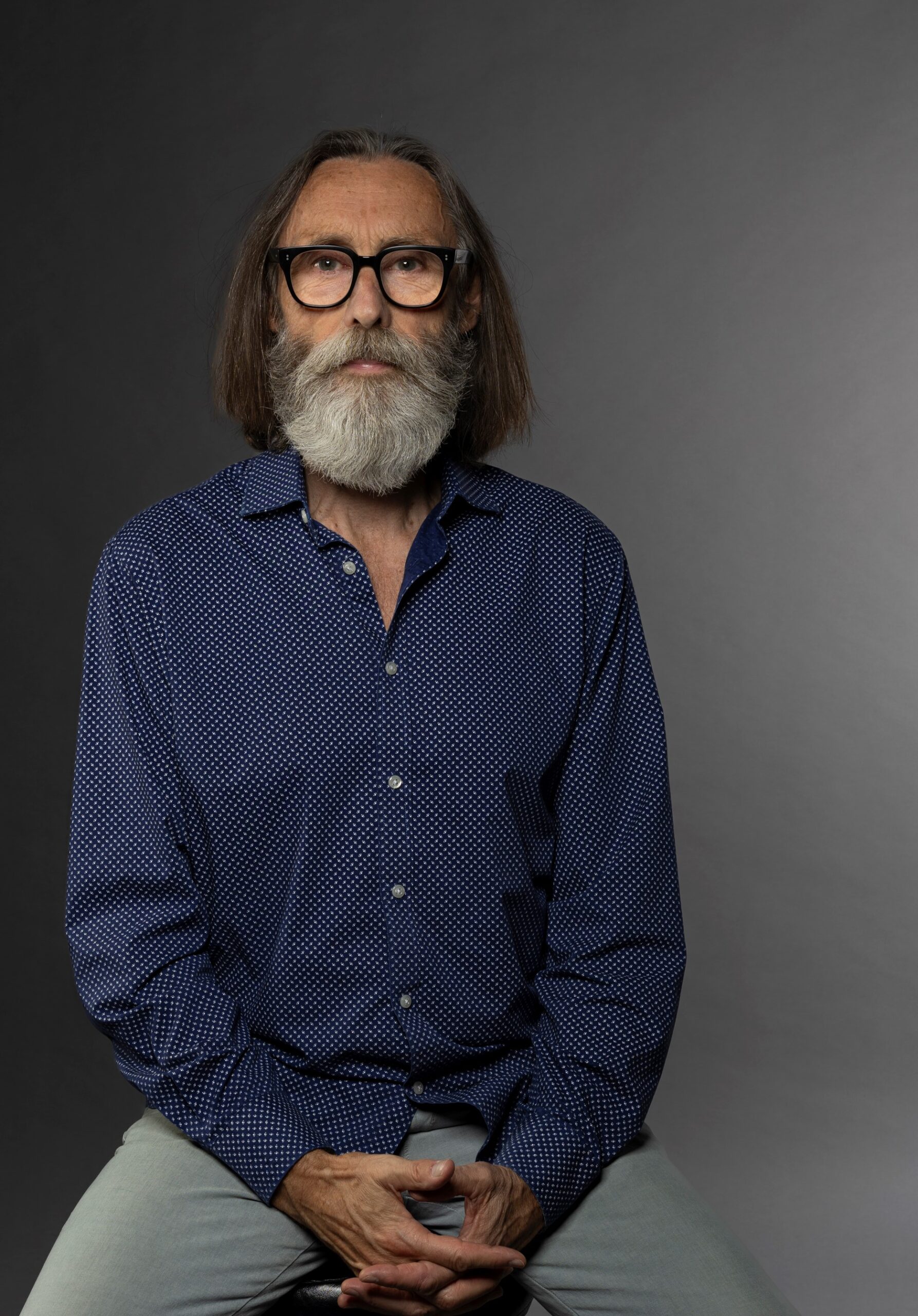
Documentary film director Guy Rex Rodgers hadn’t initially planned on writing a book, but following the 2022 launch of his film What We Choose to Remember, which explores the stories of English-speaking communities in Quebec, and after touring for three years and screening the film to fifty-five communities across the province, he knew he needed to.
What We Choose to Forget ELAN
Guy Rex Rodgers
$25
paperback
314pp
9781067398101
Both the documentary and the book seek to dispel the myth of the “pampered anglo elite” always cited by nationalists as representing all English-speaking Quebecers, and offer a far more balanced and nuanced look at the province’s history. They also aim to see what English-speaking Quebecers’ sense of belonging is here and how they define themselves.
As founding Executive Director of the English Language Arts Network (ELAN) in Quebec and co-founder of the Quebec Writers’ Federation (QWF), Rodgers spent decades connecting and creating opportunities for English-speaking artists in the province. He was ideally suited to delve into the thorny issues of identity and belonging in Quebec for a community whose contributions have often been minimized or ignored.
“Quebec is the land of ‘Je me souviens,’ Rodgers says, “yet it’s remarkable what its inhabitants do not remember or have chosen to forget.”
During the cross-province tour, while Rodgers was being exposed to an incredible depth and diversity of first-person accounts during post-screening discussions, the CAQ government was simultaneously cracking down on Quebec’s English-speaking communities by introducing Bill 96, legislation strengthening Quebec’s Charter of the French Language.
The Canadian-born, Australian-raised filmmaker and now author knew the story wasn’t finished, and the first seeds of What We Choose to Forget were planted.
“A film is brief, and you can only choose a few people who can only say a few things,” says Rodgers. “The book was an opportunity to go much deeper and offer more diversity of experiences.”
Rodgers recorded all of the conversations, which he refers to as “therapeutic.” “Bill 96 was shifting the mood from a positive and proud look back at the previous half-century,” he says, “and what we non-francophones have contributed to Quebec, to this sense of ‘My god, it’s starting again.’”
He started mapping out the book in his head. The tour ended in December 2024. By January he was writing. “It just came pouring out,” he says.
As Rodgers puts it: “It’s a story of lovable underdogs, all struggling to preserve their histories, languages, and cultures. Their tragedy is what they have chosen to forget – about themselves and each other.”
The immensely readable book is for anyone trying to understand Quebec a little better, and takes its place among many others written that offer a less monolithic version of this province. A “one-stop way to put a lot of complex ideas in an accessible way in one place,” he says.
What We Choose to Forget presents a clear and concise history of English settlements and the contributions of English speakers across Quebec, with six of the nine chapters focused on the province’s regions.
Rodgers’ choice to show population census numbers for many of these Quebec communities shows the unequivocal and stark decline of Quebec’s English-speaking population throughout the province, which Rodgers says explains not only the sense of loss they feel, but also why these communities feel a sense of ownership here too.
Yet, because of the charged political rhetoric – the danger of “the single story,” as coined by Nigerian author Chimamanda Ngozi Adichie to describe how oversimplified, narrow narratives create stereotypes – unbalanced narratives often treat Quebec’s English-speaking communities as invaders and as not really belonging here, and their concerns and worries are often mocked or dismissed.
Such concerns have only been amplified with recent stringent government policies aiming to crack down on English in Quebec even more.
In his capacity as executive director of ELAN, Rodgers has visited multiple educational institutions across Quebec over the years, and says that in the past younger Quebecers would roll their eyes when he would talk about language issues.
Bill 96 and the CAQ government’s hardline stance against anything that wasn’t French shifted something in Quebec. “Suddenly, while touring the film in 2024,” says Rodgers, “when the CAQ was cracking down on too many international students and what they felt was too much English and raising university fees, it did matter. New immigrants or even long-established young multi-generational Quebecers fluent in French were questioning their place here. To me, that was absolutely shocking.”
Rodgers doesn’t see current language battles in Quebec as English versus French, but a battle between unilingualism and multilingualism. “One thing that immigrants have in common,” he says, “is a great respect for languages. And most of them speak two or three languages.”
“People are not opposed to French,” Rodgers adds. “They like French. They live in Quebec because French matters to them. However, they have no intention of becoming unilingual francophones, and that’s not a big wish for their children or grandchildren either. Even if they went to French schools and became pretty much francophone, they retained their mother tongue and often did part of their studies in English, they’re comfortable in two or more languages. It doesn’t matter which [school] system they went through, their vision is united around seeing languages as a tool, as a strength, as an asset.”
The author says even young francophones want to be part of the world and aim to be bilingual. “They need to find a way to define Quebec identity that isn’t alienating or exclusionary,” he says.
Rodgers doesn’t believe Bill 96 does anything to support the French language in the province. In fact, the resentment created by the Bill’s overreach may even undermine it. What worries him is that there’s no obvious mechanism to dial the legislation back.
“There’s nothing to be gained by any party by modifying, diluting, or correcting it,” he says. “There’s always points to be scored by saying, ‘We’re going to pass a new tough law for the anglos,’ but if someone comes along and says, ‘That was kind of excessive, we should dial it back,’ it comes at a terrible cost [politically] and a sort of questionable benefit to them. I don’t see anybody with the wisdom, the vision, and the guts to do anything about it. And that worries me.”
Despite his concerns, Rodgers still finds his insightful look into the depths and complexity of this community – these “unshared stories,” as he calls them – fascinating and even reassuring in a certain way.
“There aren’t a lot of angry anglophones,” he says. “There’s not a lot of divisiveness. It’s just a lot of people saying, ‘I like Quebec. I like it here. We’re happy. We just want to get along and have our contributions recognized too.’ Is that so much to ask?”mRb


0 Comments