


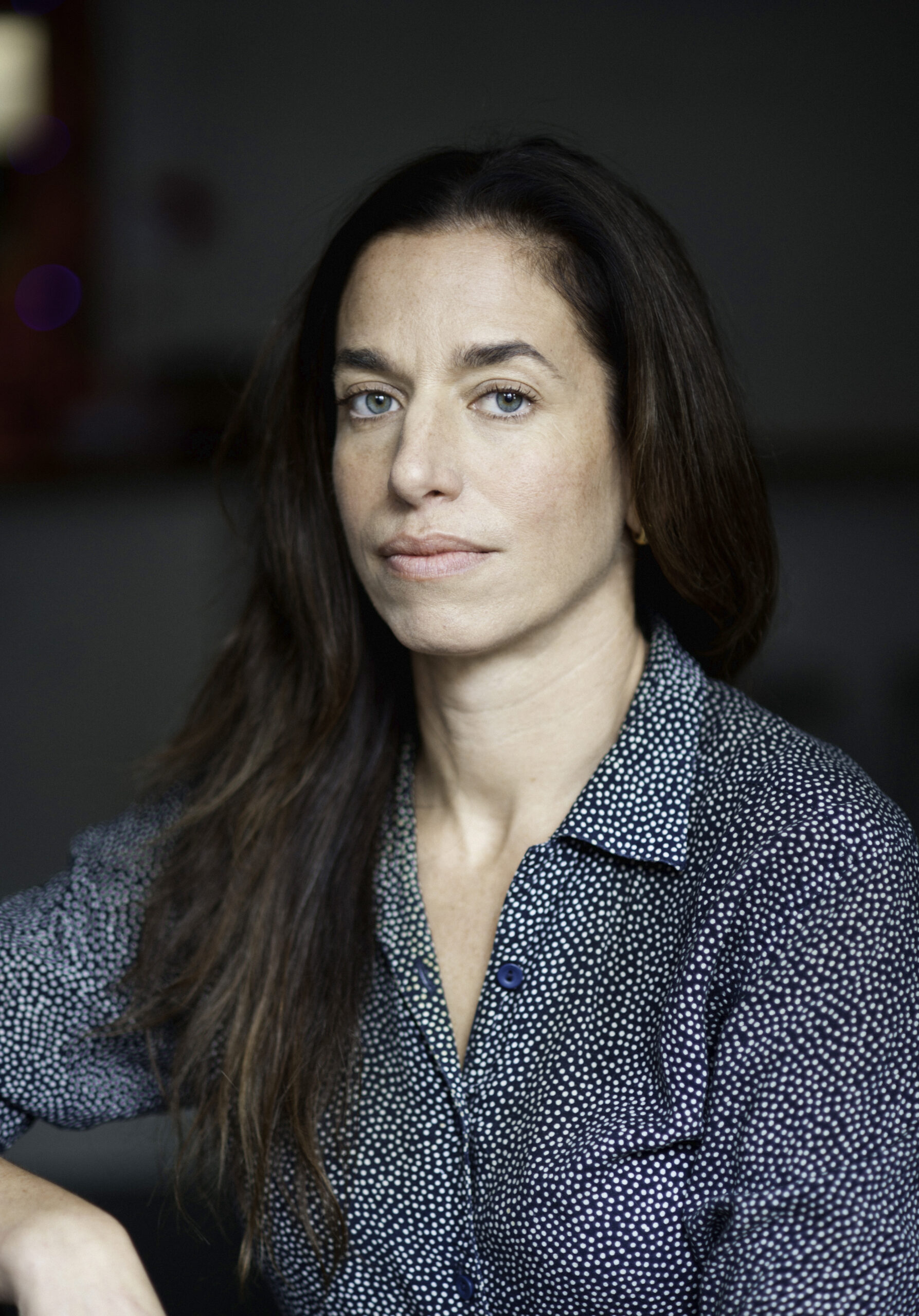
“I love social media,” begins Katherine Jezer-Morton’s The Story of Your Life – a bold admission in 2026, at a time when many of us use social platforms grudgingly if at all. The picture she paints of social media’s role in everyday life is somewhat less rosy. The local writer and Dawson professor is as aware as anyone of the bigger-picture societal ills brought on by our Silicon Valley overlords. But her book addresses a more subtle, pernicious influence: the way our personal behaviour is affected by the hustle culture within the infinite scroll.
The Story of Your Life Penguin Random House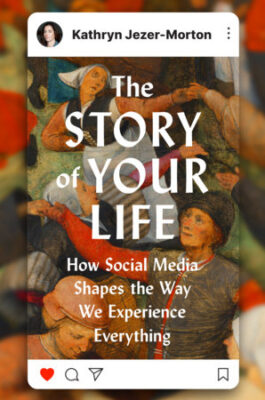
How Social Media Shapes the Way We Experience Everything
Kathryn Jezer-Morton
$38
hardcover
272pp
9781039012196
The Story of Your Life arose from her PhD in sociology at Concordia, which was about the rise of online “momfluencers” who make their living dispensing maternal advice while hawking sponsored products. “I assumed I was going to be writing a book about that,” she recalls. “By the time I finished my PhD, a) somebody else had already written that book,” she laughs (that’d be Sara Petersen’s 2023 Momfluenced). “And b) I was like, you know what? I’m ready to start thinking of another angle on this.”
What she found was that the world she’d studied had seeped into the posting habits of non-professionals: ordinary people were using the verbal and visual language of influencers – and, she observes, “seemingly without even really realizing that they’re doing it.”
In order to study this phenomenon in depth, Jezer-Morton had to step outside her circle of genteel aging hipsters with all the right opinions (my words, not hers), and talk to social media users in pockets of suburban Middle America. “Most of my friends here don’t use social media, hardly at all,” she says. “And when I was trying to describe my project to my dearest friends, they were like ‘Cool. Yeah, I have no idea what you’re talking about and I don’t care.’ It’s just not something they could relate to. But if I spoke to rooms full of American suburban moms or college kids, they were experts on this.”
I recognized many of the online behaviours Jezer-Morton describes, such as the shaming and bullying around hot socio-political topics that take place across the political spectrum, from my own social feeds. But other aspects of online life she describes, like the careful curation of how domestic life is presented, were either totally alien to me or things I just hadn’t noticed. This is partly because of the mainstream, Middle American focus of the book; also, as the author admits, her subjects skew female. “I think social media is quite gendered, it’s reinforcing gender norms in a lot of ways,” she says. “Men and women have pretty different relationships to social media, and they were too different for me to comfortably fit in one book. I have heard from men who have read it, and they’re like ‘I live in this world, I belong to this representational environment. I don’t really post in it, but my wife posts in it and it affects me.’ So they know about it, but they don’t contribute to it.”
Jezer-Morton, a mother of two sons who writes a parenting column, Brooding, for New York magazine’s The Cut, argues that this online gender divide has some unwholesome side effects IRL. “Domestic environments are becoming more feminized, and we have the kind of exile of teenage boys into the basement, the man cave,” she explains. “This idea that public spaces in the house have to look good, because they’re going to be represented in photos, and man stuff is ugly and yucky and needs to be pushed away – that’s really fuckin’ weird. And it makes you think, wow, the manosphere is obviously really troubling and deplorable, and it’s not like these guys have a point, but it’s not unconnected. There’s this sense of ‘We don’t belong, they don’t want us. They won’t accept us.’ It’s not like there’s a direct arrow, but these are related ideas.”
Some of the most compelling parts of the book are Jezer-Morton’s descriptions of her childhood growing up on the Vermont commune, an experience with which she makes interesting comparisons to the communities that form online. I found myself wanting to read more about her unique upbringing. “My editor was also like that. ‘More, more!’” she laughs. “I would love to write about the commune, and I have a lot of things I’ve thought about, but there are people I would need to check in with first… I can’t tell you how many people have been like ‘This is the money project. Just do it, let’s go.’ And it’s very appealing to me, but it’s also horrifying that I would do something that would hurt anyone in the service of my success.”
Although she admits that her love for social media has dimmed over the years, I couldn’t help but note with bemusement that on my ever more infrequent check-ins to the platform formerly known as Twitter, there she is still sharing witticisms and throwing shade just like in the good old days. “I’m gonna tell you, I still like that platform,” she says with a hint of mischief. “I know it’s trash, I know it’s garbage, I know it’s owned by Elon Musk – like, I know it’s categorically bad. But… that’s probably the one I like the best.”
Many individuals and institutions (including the mRb) have shut their accounts on the accursed platform, some decamping to the more gentle pastures of Bluesky. “I have an account, but I never use it,” says Jezer-Morton of this friendlier, if less edgy, alternative. “I find it super boring and annoying. And I know that Twitter is bad, but I still like it better.” Tying her observations in with the book’s theme of online personality curation, she continues: “There’s this really powerful undercurrent on Bluesky of reputation management. This is the thing I find most troubling about all of this, is the cultivation of the fact that you’re right. It’s like, ‘My beautiful English garden of all my correct opinions.’ And I just find that fuckin’ the worst. I like that Twitter is a bit self-loathing, and a bit… maybe some of us really are stupid or awful. And there’s something a bit more human about it to me.”mRb

0 Comments