


Anyone who’s ever gotten the runaround while seeking help for chronic pain will likely relate to Élyssa Marcoux-Bissoondath’s debut novel. Afflicted women, in particular, may fantasize about offering copies of the book to doctors, even while acknowledging that many are doing their best with limited resources. Considering the ongoing lack and narrow focus of female-specific medical research in Canada, A Hungry Fire merits applause for illuminating the implications of such insufficiencies.
A Hungry Fire Cormorant Books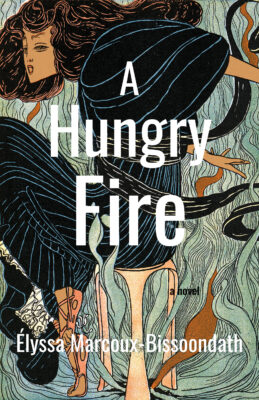
Élyssa Marcoux-Bissoondath
$24.95
paperback
320pp
9781770868311
Marcoux-Bissoondath cuts through this silence, vividly rendering Dido’s plight with extreme pelvic pain. Traversing her late twenties with multiple conditions, including suspected endometriosis, the mixed-race protagonist advocates for her health while drawing inspiration from the dark-haired, mythical monarch whose name she shares, Queen Dido, fiery founder of Carthage.
Having moved from Quebec City to Toronto, Dido lives with her loyal, long-term partner, Juno. Professionally, she endures a punishing schedule, despite her crippling cramps, for a well-paying job that offers health benefits but douses the fire in her soul. A civil engineer with repressed artistic aspirations, she privately dreams of designing her own Carthage, and doggedly pursues a creative side project, rebuilding her dignity.
Interweaving the two Didos’ stories, the author highlights her present-day heroine’s resilience, addressing a serious subject with sparks of humour and glowing originality. “Chief among the nine Muses,” Calliope, a quirky narrator, grabs our attention in the opening pages, reminding us that, in Virgil’s epic poem, Queen Dido takes her own life. Abandoned by her lover Aeneas, she’s consumed with vengeful rage and stabs herself with the sword he’s gifted her upon a funeral pyre. Tension builds as modern-day Dido gets a different brand of brush-off, and the reader wonders: how will she reclaim her fire without ending in flames?
Unlike the Queen, modern Dido is blessed with a supportive man, but she meets betrayal in a medical setting. She’s already deep into her “thirteen years of undiagnosable pain” when she’s finally referred to dismissive Dr. Aeneas, an eminent gynaecologist who only echoes a by-now-all-too-familiar medical tune, where diagnostic protocols clearly favour patients who are trying and failing to get pregnant. With good reason, Dido mentally rejects the implication that women must be ready to create new life to be recognized as worthy of thriving in their own.
Alongside Juno, Dido counts her parents as valued protectors. While her father’s voice is absent from dialogue, her mother, Hera (who’s endured endometriosis), comes through clearly as a trusted confidante. Dido recalls being coached through her period pains as an eleven-year-old girl: “If you feel you can’t cope, you can stay home. But how you decide to handle it now will determine how you live your life in the future, it isn’t going to get better. You have to decide what kind of woman you’re going to be.” While this well-intentioned advice later helps Dido hold down a job, one considers how such stoicism can backfire, fanning the flames of shame while accommodating everyone but the sufferer.
An even fuller account of chronic pain might embody more of the personal sphere, fleshing out how Dido and her partner withstand its threats to intimacy – a challenge barely mentioned. Yet candid descriptions of medical experiences, painful procedures included, are ample, commendably countering the medical gaslighting that can occur with difficult-to-diagnose conditions.
As Marcoux-Bissoondath rightly spotlights health problems that continue to burden many women and affect their loved ones by extension, a burning question takes hold: How would the world benefit if more women were relieved of such pain and freed to meet their full potential?mRb
0 Comments