


The 2017 #MeToo movement shone a light on the pervasiveness of women’s experiences of sexual harassment and sexual assault. While this eventually led to tightened workplace policies and even government legislation, even now we needn’t look very far to see news stories about assaults not being prosecuted, victims not being believed. Fragile Like a Bomb takes a fresh look at the issue of abuse of power in intimate relationships by juxtaposing it against power dynamics in the government.
Fragile Like a Bomb QC Fiction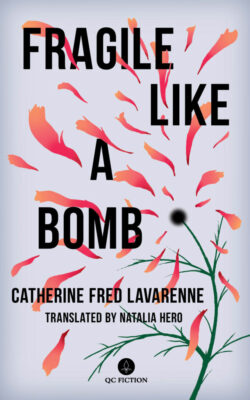
Catherine Fred Lavarenne
Translated by Natalia Hero
$27.95
paperback
370pp
9781771864312
The story weaves between Stéphanie’s job challenges, life with her husband and teenaged son, past memories, sexual fantasies, and her bond with her best friend, Marianne. Despite the first-person narration, it sometimes seems as though we’re being shown Stéphanie’s own life through an outsider’s gaze: there is the supportive husband making pasta for a welcome-home dinner. But this rosy view of her life increasingly seems to clash with her innermost thoughts and her actions. As the gulf widens between her weeks at the legislature in Quebec City and her weeks at home in Montreal, Stéphanie becomes increasingly alienated from herself. She even visualizes two versions of herself, one who materializes at the door to her home and the other who waits patiently outside for her to go back to work.
While Stéphanie is struggling with her political and domestic roles, she also becomes personally impacted by #MeToo revelations. The accounts of sexual violence force Stéphanie to reexamine her relationships, past and present. She must come to terms with her own history and realign her view of herself. (Given the subject matter, readers should be aware that this book contains descriptions of sexual violence.)
Both in her political work and in her personal life, Stéphanie must decide whether she will speak out and make waves. By making this parallel between political coercion and sexual violence, the novel serves as an indictment of party politics, rape culture, and systems that keep people complicit and silent in oppression.
One of the book’s strengths is its portrayal of the cogwheels that make up provincial politics, as a hopeful new party falls into pre-established ruts. The author’s descriptions of Stéphanie’s political experiences take up a significant portion of the book, which can be a taxing read: too many meetings, too many instances of “have you read the brief yet?” Care was taken in the translation to convey the flavour of the French language; however, this sometimes leads to awkward passages in English, particularly in the dialogue.
Despite the seriousness of the subject matter, the story also captures the flavour of Montreal neighbourhood life and offers glimpses of its lively political and literary scenes. But perhaps the novel’s brightest point is its description of varied connections between women, and especially of the deep and sustaining friendship between Stéphanie and Marianne. These bonds shimmer, a source of hope in the face of violence and repression.mRb



0 Comments