

Montreal-based writer and cartoonist Gabrielle Drolet’s debut book Look Ma, No Hands: A Chronic Pain Memoir is an earnest and intensely honest exploration of art and chronic pain. In 2021, at the height of the global pandemic, Drolet began experiencing pain that made it difficult to use her hands. This pain would continue to worsen as she navigated freelance writing gigs, graduate school, multiple cross-provincial moves, and the horrors of the Quebec medical system. Amidst all the uncertainty of diagnosis and pain management, Drolet paints a picture of her life with wit, humour, and deep self-compassion. Reading Look Ma, No Hands felt like catching up with an old friend – you pick up right where you left off, no detail too small or uncomfortable to divulge.
Drolet’s memoir is structured in a seamless cadence of personal essays that detail her experiences with chronic pain in young adulthood. She discusses having to relearn tasks that once came naturally to her, how the onset of chronic illness affected her romantic relationships (e.g., feeling burdened with the weight of making her pain digestible for others), and how navigating her own illness gave her more insight into the experiences of others.
Look Ma, No Hands McClelland & Stewart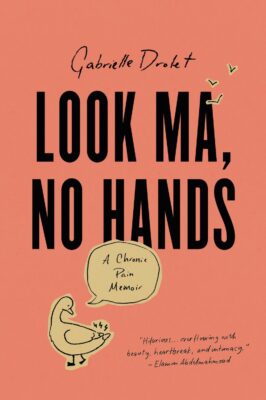
A Chronic Pain Memoir
Gabrielle Drolet
$24.95
paper
272pp
9780771019142
Look Ma, No Hands is more than a memoir; it’s a meditation on accessibility, bodily autonomy, and the complexities of living – dating, putting IKEA furniture together, moving cities – with chronic pain. Drolet’s writing is tonally consistent, vulnerable, and, at times, laugh-out-loud funny. I simply couldn’t get over the part in “Barbecue Leftovers” where she asks a well-meaning medical student whether she would be allowed to keep her rib bone if she opted for “the surgery.” Rather than fixate on the looming reality of chronic pain or the procedure itself, Drolet instead focuses on the surreal, almost comical possibility of shaving her rib bone into “a small bespoke spoon.” She has the uncanny ability to find humour and levity in unexpected, quotidian places.
If you’re looking for a book that will have you laughing out loud while quietly reminding you that you’re not alone, this is it. Though Drolet discusses the difficulty of moving from typing to voice-to-text, it is evident that she has found her voice anew. Coupled with her illustrations – previously published in The New Yorker, The Narwhal, and The Globe and Mail – Drolet offers us a vivid memoir, opening her life to us with candour and mirth. mRb
0 Comments