Claudine Dumont’s Captive is animated by the idea of power, and how quickly it can be gained or lost. When Emma, the novel’s first-person narrator, is abducted from her bedroom by a group of masked assailants and awakens in a locked room, she is quickly reduced to a state of helplessness and terror.
The title suggests tangled nights on the beach, afternoon cocktails, at least a bit of coming-of-age necking. But That Summer in Provincetown is only glancingly about any such summer.
In the village of Malabourg, girlhood is a difficult, even dangerous time. This fictional town on the Baie des Chaleurs, the setting of Perrine Leblanc’s second novel, is a place out of time, inhabited by generations of lantern-jawed fishermen and run by local gossips. The Lake, translated into English by Lazer Lederhendler, seems at first glance to promise a kind of thriller, but its village setting is the stuff of contes or legends.
The word Balkan may bring to mind a number of associations. Complex borders, fraternity, religion, betrayal, atrocity. It gets complicated very quickly. Josip Novakovich’s most recent collection of short stories, Ex-Yu, explores each of these topics in turn and in conjunction
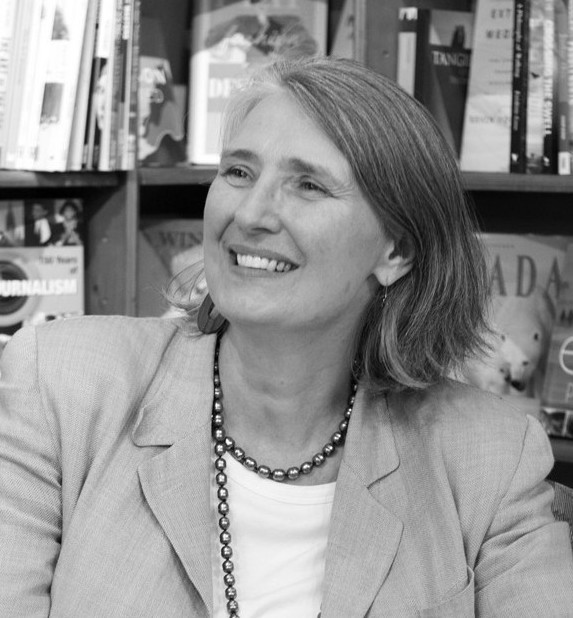
The worst writing advice Louise Penny ever got – to abandon any hope of seeing her work in print – came early in her career, back when she first decided to give creative writing a go. “There are a lot of people who went out of their way to tell me that I wouldn’t be published,” Penny recalls.
Fans of Kate Beaton don’t need a review to tell them what to expect from Step Aside, Pops, the second collection from the author of the web-comic Hark! A Vagrant. Beaton’s followers have no doubt been eagerly anticipating another feast of lumpy presidents, sassy dames, and unaccountably bitter superheroes since Beaton’s first collection (also called Hark! A Vagrant) came out in 2011. Step Aside, Pops won’t disappoint, and those who have yet to discover her work have a hearty spread awaiting them.
Mountain City Girls, written by Anna and Jane, is not a retelling of the McGarrigles’ career in music. Rather, it is a captivating account of what came before that. The book is a richly worded family history, reaching back three generations, and then focusing mostly on the McGarrigle family unit – Father Frank, Mother Gaby, and sisters Jane, Anna, and Kate.
After making a splash in the alternative comics world last year with Photobooth, a delightfully idiosyncratic history of the titular machines and the author’s own obsession with them, Montreal-based artist and illustrator Meags Fitzgerald returns this fall with Long Red Hair, a new memoir about childhood, female friendship, and coming of age queer.
Not everything that is faced can be changed; but nothing can be changed until it is faced,” wrote James Baldwin, an apt epigraph for No Safeguards, the new novel by H. Nigel Thomas. Cultural memory often involves a good deal of willed forgetting, an overlooking of painful parts of experience in favour of a dominant narrative.
Two new books – In Defiance and Generation Rising – are useful in situating the 2012 strike within an ongoing struggle against society’s marketization at the expense of its citizens, and set against the backdrop of Quebec’s unique sociopolitical history.
Couched in the English title of Madeleine Gagnon’s newly translated autobiography is a consciousness of the inability to accurately convey the facts of one’s life. Memoir refers not only to a Life, but more specifically to a Life in Writing: “fiction is everywhere when you tell your own story,” Gagnon writes. Autobiography emerges from the contradiction between a unified life and multiple selves.