In her memoir, In Search of Pure Lust, Lise Weil shares a history of self-discovery, led primarily by her lesbian identity, and paints a constellation lit up by a life lived relationally.
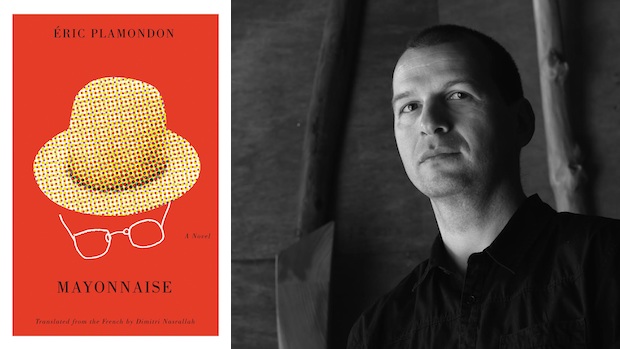
With Mayonnaise, the second book of the 1984 trilogy, the poet and novelist Richard Brautigan becomes Rivages's central fixation. Among Plamondon's forest of factoids about Camus, General Jodl, and Saint Antoine, about the Remington Rifle Company and the Singer Sewing Machine, Charlie Chaplin and Vladimir Nabokov, Brautigan emerges as a commanding influence.
Just like its namesake street, Abla Farhoud’s newly translated novel is populated with memorable characters from all walks of life. Young and old, settled and transient, the characters weave in and out of each other’s lives, inhabiting a modern, multicultural society that shares its neighbourhood with a thriving but insular community of Hasidic Jews. In brief, vivid chapters, Farhoud provides glimpses into the lives of the Montreal residents who inhabit Hutchison Street, which “does not separate Outremont from Mile End, as you might think; it brings them together.”
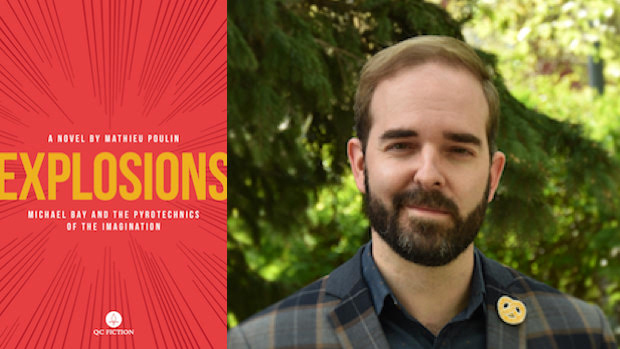
But what if Michael Bay is really a misunderstood genius? An artist, critically misinterpreted, academically ignored, deprived of his true vision because of the manipulation of the studios in the name of outrageous commercial profits? Or what if he’s part of something much deeper and even more mysterious, something beyond the scope of mass media, something that’s shaped both civilization and his very consciousness from childhood? These are the kinds of heady, ridiculous questions Mathieu Poulin detonates consistently throughout the course of his novel Explosions: Michael Bay and the Pyrotechnics of the Imagination.
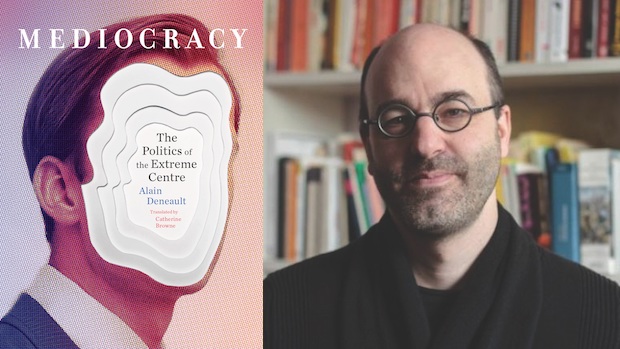
When Alain Deneault uses the word mediocre in his new book-length essay, he is not describing something (or someone) inferior or incompetent. Rather, he is talking about mediocrity as it defines the actual average, the mean of things. He is taking aim at a society where this average “has been granted authority.”
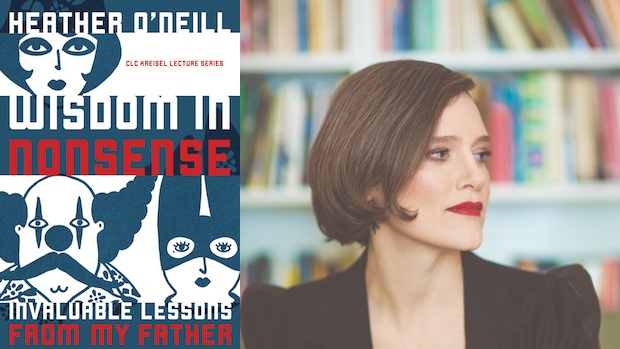
Wisdom in Nonsense, which is based on the CLC Kreisel Lecture O’Neill gave in 2017, introduces The Real Mister O’Neill. Having aspired to become a gangster in his youth, Buddy O’Neill stepped up to the paternal plate after his once-and-former love shrugged off the yoke of motherhood. In these thirteen “lessons” (and one incongruous blank-paged invitation for readers to contribute their own dadnecdotes), O’Neill fille catalogues what good can be gleaned from advice that is at worst delusional and at best out of step with reality.
The Véhicule Press offices are on the lower floor of co-publishers Nancy Marrelli and Simon Dardick’s house on Roy Street, just east of Saint-Laurent Boulevard, where they’ve been since 1981, when Véhicule shifted from a printing and publishing co-operative model to that of a small publisher.
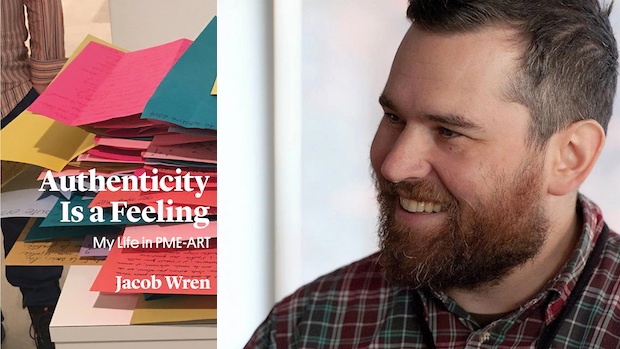
Through his first-person narration, his honesty, humility, and stringent self-criticism, through the descriptions of his internationally acclaimed performance work beyond the scope of his literary achievements – of which I had already been aware – I was able to become more familiar with Wren. If I already held Wren in high esteem as a writer, artist, and person, this fascinating hybrid of memoir, archive, performance history and theory, and humorous storytelling reinforced that impression.
As a former soldier in the Iraq War, Dean knows he’s being trailed. He catches Eugenie, whose dilapidated New Brunswick farmhouse he’s been working on, following him into the backwoods of her property where he’s set up camp.
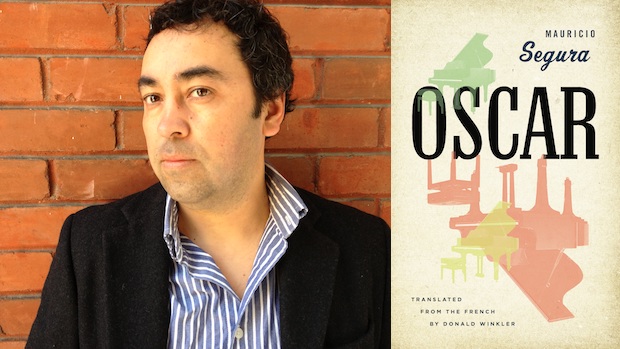
Though it is a fairly slender book, Mauricio Segura’s novel Oscar practically bursts at the seams with historical events, colourful characters, and timeless themes. Based loosely on the life of pianist Oscar Peterson, the novel’s heart and soul lies in Montreal’s Little Burgundy neighbourhood, its bustling life seen through the eyes of a thriving black, immigrant community.
The first thing that hit me in my experience of Aline Kominsky-Crumb’s Love That Bunch was the looming, powerful presence of bodies in the comics. The force of the bodies was overwhelming. It wasn’t a cerebral experience – it was physical.