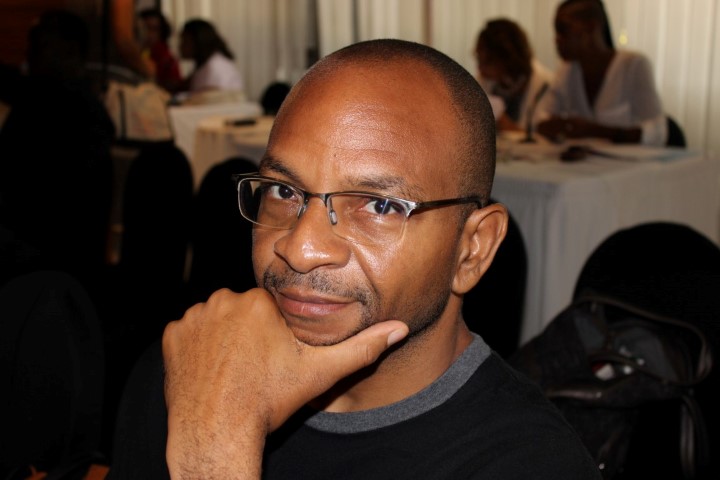
“I can’t do realism. I mean, it’s a lie,” Jacob Wren says with a laugh in his voice. Sitting across from me in a café in Mile-Ex, the prolific novelist and artist continues, “a book isn’t reality. Reality isn’t even reality.”
Translator Peter McCambridge is no ingénue to the art, having translated seven novels, all from Quebec. He directs the website Québec Reads and Baraka Book’s new imprint of Quebec literature in translation, QC Fiction.
Montreal writer Alice Zorn immortalizes this icon in her beautifully crafted second novel, Five Roses. Like the gigantic blue eyes of T. J. Eckleburg looking down on the Valley of Ashes, Zorn’s sign is a landmark that does service as a literary device.
There is a moment in childhood that first marks our awareness of the wider world, the moment we recognize what takes place beyond our own sphere. Our young selves are drawn to the narrative, to the images played and replayed on the news, to the hushed thrall of the grown-ups.
The year is off to a good start for Monique Polak. Not only will she see her eighteenth, nineteenth, and twentieth books for young readers published, but she’s also the first CBC/QWF Writer-in-Residence. For Polak, these are all opportunities to tell her stories.
Barking & Biting: The Poetry of Sina Queyras, edited by Erin Wunker, is the twenty-fifth volume of Canadian poetry in Wilfrid Laurier Press’s Laurier Poetry Series. Thirty-five poems are selected from across a poet’s career and supplemented by an engaging critical introduction by the editor and an afterword by the poet.
Haiti occupies an important place in the consciousness of the Americas. Formerly known as St. Domingue, it became independent in 1804 when its former slaves defeated Napoleon Bonaparte’s army, the French general’s first major military defeat.
The worst writing advice Louise Penny ever got – to abandon any hope of seeing her work in print – came early in her career, back when she first decided to give creative writing a go. “There are a lot of people who went out of their way to tell me that I wouldn’t be published,” Penny recalls.
Mountain City Girls, written by Anna and Jane, is not a retelling of the McGarrigles’ career in music. Rather, it is a captivating account of what came before that. The book is a richly worded family history, reaching back three generations, and then focusing mostly on the McGarrigle family unit – Father Frank, Mother Gaby, and sisters Jane, Anna, and Kate.
After making a splash in the alternative comics world last year with Photobooth, a delightfully idiosyncratic history of the titular machines and the author’s own obsession with them, Montreal-based artist and illustrator Meags Fitzgerald returns this fall with Long Red Hair, a new memoir about childhood, female friendship, and coming of age queer.