Villages in Cities: Community Land Ownership, Cooperative Housing, and the Milton Parc Story tracks the community resistance and solidarity that scuppered Concordia Estates, alongside looking at the efforts and achievements of cooperative housing movements worldwide. It’s an academic guide for communities that want to protect their neighbourhoods from the claws ofreal estate speculation and gentrification, a toxic pollutant that discharges urban renewal at the cost of displacing original inhabitants, according to editors Joshua Hawley and Dimitrios Roussopoulos.
Kent Nagano, the Orchestre symphonique de Montréal’s music director since 2006, is more than just a conductor; he’s an outreach worker, constantly trying to win over new audiences to classical music, from hockey fans to street kids to Inuit communities in the Far North. He puts this mission in writing with Classical Music: Expect the Unexpected (co-written with Inge Kloepfer) – part manifesto, part impassioned plea, part sincere sales pitch for classical music as a whole
Frédérick Lavoie’s For Want of a Fir Tree: Ukraine Undone, translated by Donald Winkler, provides a portrait of Ukraine in the pivotal months surrounding the unseating of President Viktor Yanukovych and the subsequent division of Ukraine into a pro-Europe west and a pro-Russia east. Russia’s annexation of Crimea in March 2014 led to outright war between Russian separatist forces (a combination of Ukrainian rebels and imported Russian troops) in the Donbas region and the Ukrainian government.
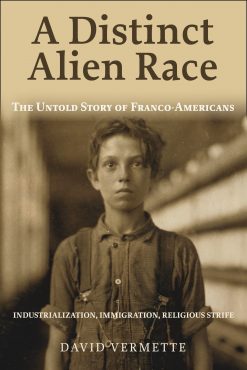
It’s amazing to learn, from this compelling and comprehensive book, that there are as many Americans claiming French-Canadian ancestry today as there are Canadians, about ten million on each side of the border. Those in Canada are descendants of French colonists who settled in the St. Lawrence Valley (and elsewhere) in the seventeenth and eighteenth centuries. Those in the United States are the heirs of nearly a million French-Canadians, mostly from Quebec, who relocated in the period from 1865 to 1930 to work in the shoe factories and paper plants and especially the cotton mills in dozens of New England towns and cities.
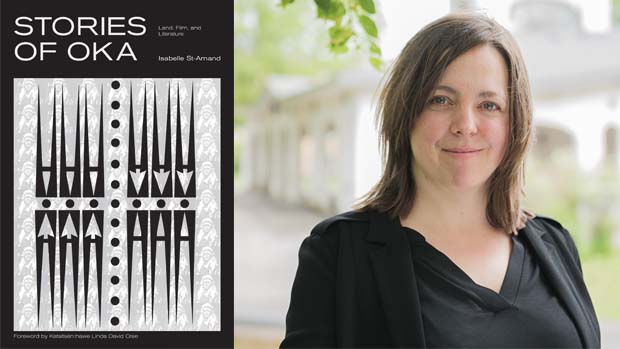
In analyzing the writing, art, film, fiction, and facts surrounding the so-called Oka Crisis of the 1990s in Stories of Oka: Land, Film, and Literature, Isabelle St-Amand shows that history is explored via many winding, complex, and at times contradictory paths and not the broad boulevards historic winners stroll in their victory parades.
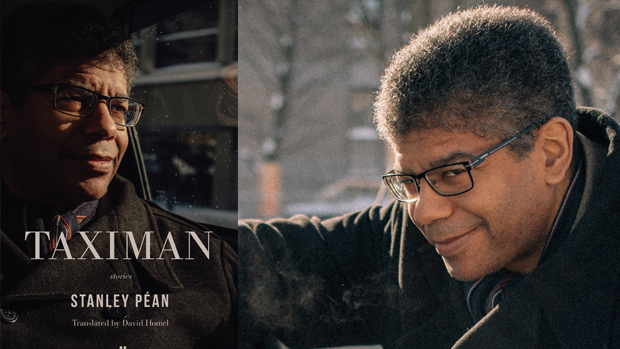
Péan tells these stories without a sense of outrage or anger, because he’s writing as a Quebecer, with a sense of sometimes uneasy but always real belonging, and it is this sense that permeates Taximan from beginning to end.
Context is everything. If there’s anything to be learned from watching the news in the age of Trump (and there’s a lot), it’s the peril of reading about and reacting to world events divorced from their historical nuances. Mike Mason’s Turbulent Empires: A History of Global Capitalism since 1945 might help.
In this intricately layered book, a cross-genre narrative encompassing memoir, biography, goodbye letter, and poetic socio-historic treatise stretching from Vancouver to Montreal, Erín Moure reminds us that memory transcends mortality, that in our rawest grief, love and reflection can offer the greatest shelters. The disclaimer upfront avows that “memory is a work of the imagination.”
Will Aitken does something remarkable in his new book: he brings together a keen critical eye and an open heart, and – in doing so – creates a unique hybrid of critical essay and memoir. And though Aitken begins with strong material – a classic play in a new translation by a major poet, staged by a renowned actor and director – it’s what he does with the material that is most striking.
Bologna’s success is just one of several interesting stories in Judith Dellheim and Jason Prince’s engaging, if at times frustrating, Free Public Transit: And Why We Don’t Pay to Ride Elevators. The chapters, written by academics, journalists, and activists, delve into the “political side” of the question of how best to address the mobility needs of a city.
As editor Andy Brown sets out in the foreword of this collection of essays and interviews, BDQ refers to Quebec comics or bande dessinée québécoise, just as manga refers to comics from Japan. The collection is divided into four time periods, with the longest section devoted to “The Nineties,” evidently an ebullient period for sequential art, particularly in Montreal.