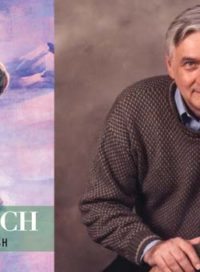
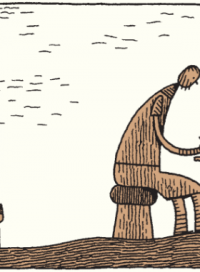
With her latest graphic novel, a study of how the best and worst aspects of families can be passed from generation to generation, Weng Pixin is exploring rich and timeless thematic ground, and she fully does it justice.
The third instalment in H. Nigel Thomas’ planned quartet on the Caribbean Canadian immigrant experience shows the rare ability to telescope a whole culture into an intimately scaled frame, deploying a dispassionate eye, pin-sharp dialogue, and deft touches of humour.
This new undertaking by QWF Award- winner Gollner belongs to a specialized category attached to writers with especially fervent followings. Can there be a devoted reader who hasn’t mused on how fun it would be to hang with her favourite writer for a couple of hours?
Frédérick Lavoie is a Quebec writer and journalist whose political engagement is deep-rooted: he once spent time in a Belarus prison for the offence of confronting corruption there. Hardly surprising, then, that he found his interest piqued by the republication in Cuba, after a decades-long absence, of Orwell’s 1984, and made three trips to the island to investigate. The result won the 2018 Governor General’s Literary Award for French-language Non-fiction in its first edition; now, no less timely for the lag, it gets its English translation.
The true heroes of history don’t always announce themselves. Sometimes they have to be found. Consider Lauro de Bosis. You might not know him now, but by the time you've finished Taras Grescoe's new book he may well be in your personal pantheon.
The storytelling tradition would never have become a tradition if people hadn’t been willing to work on variations of what came before, and in Sasquatch and the Green Sash, Henderson takes Sir Gawain and the Green Knight further afield than most would dare. Describing his project in the acknowledgements as “a hybrid thing, at once an adaptation, translation, and Canadianization,” he makes good on all three claims.
For many lay readers coming to Vanessa R. Sasson’s powerfully imagined new novel Yasodhara, the nearest previous equivalent might be Herman Hesse’s Siddhartha. A 1922 novel that told the tale of an acolyte in the time of Gautama Buddha, it achieved a grassroots revival as a travel- companion volume for counterculture seekers of the 1960s and 70s.
Since its publication in 2014, Eric Dupont’s La Fiancée américaine has sold more than sixty thousand copies in Quebec. Using sales figures as any kind of metric for artistic worth is a slippery slope, of course. But the number above is worth pondering for several reasons. Check the shelves in just about every household in Quebec with any inclination toward literary fiction and you will find a copy of Dupont’s novel. It’s the Thriller or ABBA’s Greatest Hits of its world, with a popular reach most serious writers stopped dreaming of decades ago.
I come to Benjamin Woo’s book Getting a Life: The Social Worlds of Geek Culture not as a hostile observer of the culture he examines, but as a baffled one.
Princess Diana had just died. The internet was barely a thing. I’m not sure there were websites yet. The word Amazon called to mind a river, not an information technology behemoth. Grunge was over and something called electronica was being touted as The Future. Yes, things were different in the fall of 1997, no less so in Montreal.
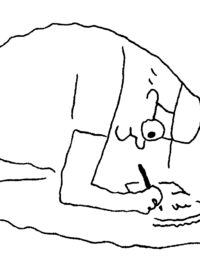
Hostage is the account, as told to Delisle, of how a Doctors Without Borders worker in Nazran, Russia, was kidnapped by Chechen rebels in 1997 and held for three months in an undisclosed location. And there, handcuffed to a radiator in a bare room with a boarded-up window, trying to maintain hope, is where we find Christophe André for most of this remarkable book’s 400-plus pages.

In Tumbleweed, Josip Novakovich is equipped with a deep writer’s arsenal – a sharp eye for the telling detail, a subtly rhythmic prose style, and deadpan humour.
First published in 2008, the small, sparsely rendered story of a nine-year-old boy’s attempts to come to terms with the death of his five-year-old brother did more than just launch the comics career of Jonquière-born Girard; it became a word-of-mouth cult item inspiring a rare devotion in its readers. People press Nicolas on friends, give it as a gift, revisit it in times of need.
Paul Up North is the eighth volume in the Paul series. Rabagliati says it might be the last, and if that turns out to be true, we’re leaving at an odd juncture. The new book disdains straight chronology to take a nostalgic trip back to the Olympic summer of 1976; Paul is an awkward, frequently surly adolescent discovering love in the Laurentians when he isn’t hiding out in his bedroom at home.
Twenty-eight. That’s the number I can’t get out of my head. There are a lot of figures and statistics in Wade Rowland’s cir de cœur for the decline to near-terminal status of the once proud and nation-defining CBC, but for this reader the one that jumped off the page and put it all in perspective appears in a breakdown of the comparative per capita subsidy for public broadcasting among countries who have such things.
The D&Q brand is the kind that earns your trust, and before you know it you can find yourself venturing into outré realms – Marc Bell’s intricate free-standing psychedelic tableaux, Anders Nilsen’s dream-logic minimalist epics – that you would previously have never considered.
Joe Ollmann isn’t comfortable with praise. On the back cover of his new book, the graphic novelist professes to blush as he hand-letters glowing testimonials from fellow cartoonist Seth and culture journalist Jeet Heer. But if the collection Happy Stories About Well-Adjusted People is anything to go by, he’d better get used to such things
On Loving Women is a graphic novel, but only in the loosest sense of that often-ambiguous designation. Montreal- born Obomsawin, who made her English-language debut in 2009 with a comics version of the life of nineteenth- century German foundling Kaspar Hauser, has gathered 10 sexual awakening/coming-out accounts – her own and those of nine other women – and told them in discrete chapters: “Mathilde’s Story,” “Maxime’s Story,” etc.
Shigeru Mizuki is a living icon in Japan, to the point where an entire street in his birthplace, Sakaiminato, is given over to bronze figures representing characters from his work, and the nearest airport has been renamed in his honour.
It’s clear that Goliath never got a fair shake in the telling, whether in the Old Testament or in the many subsequent versions. But now, after a mere couple of millennia, he has, thanks to Scottish cartoonist Tom Gauld. Better late than never.
Adam Gopnik has been reliably surprising us for so long now that there might be a danger of taking him for granted. Step back a bit from his work, though, and it becomes clear just how unusual the fifty-five year-old’s approach is.
Go into any bar of a certain type and you’re almost sure to see a guy like Spat Ryan. He’ll look like he’s been there for a while, sitting alone, but not so alone that he’s not compelled to voice his comments about all and sundry: the music, the weather, politics, women.